My Studio
Welcome to my studio catalogue. I have created an easy to access list of my favorite, most used items in my studio.
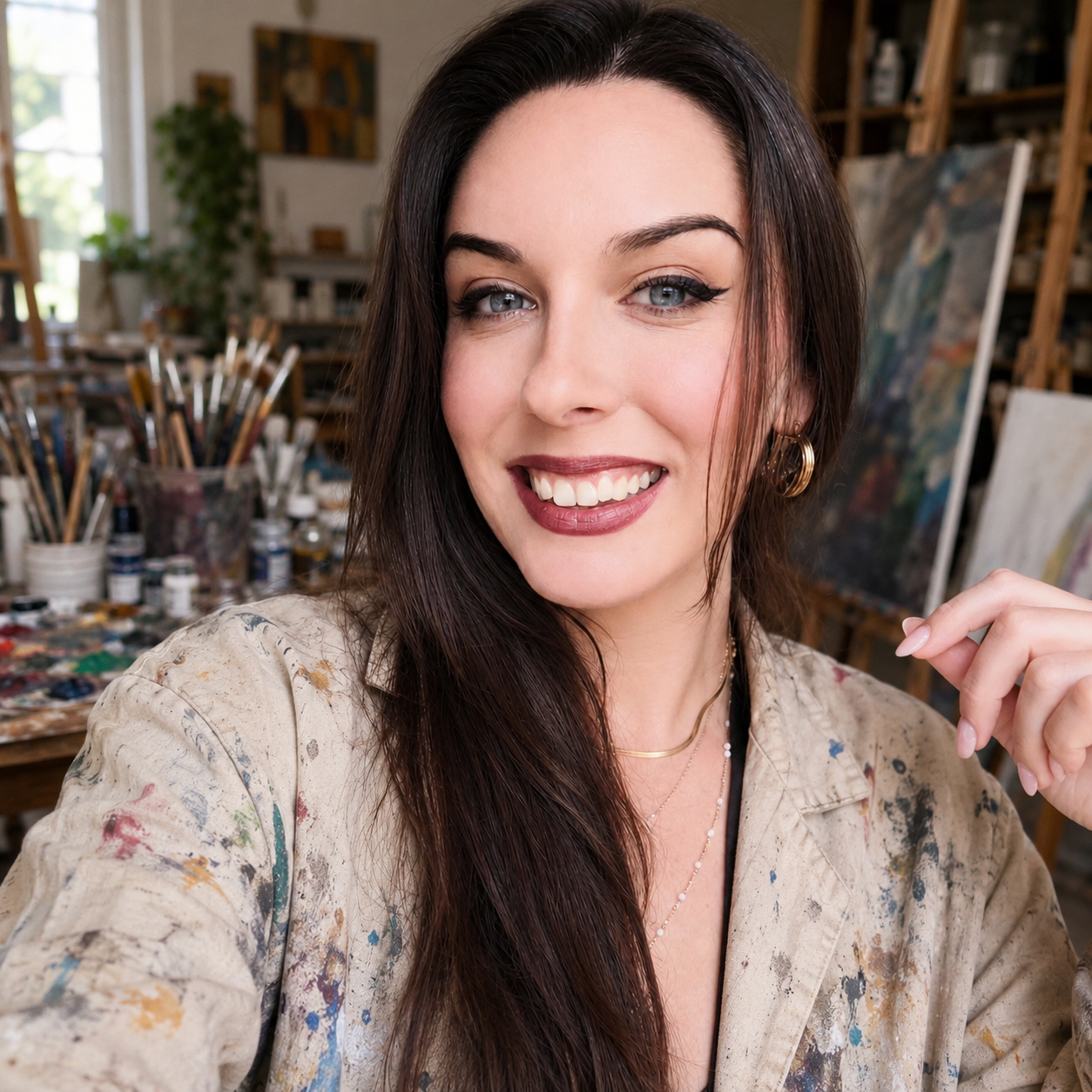
Inside the Studio: A Creative Interview with Artist Christina Leigh
Artist Christina Leigh creates contemporary abstract cartography rooted in travel, research, history, and lived experience. In this studio interview, she reflects on returning to painting, finding inspiration through observation, the role of faith and curiosity in her creative practice, and why a map can reveal far more than where we have been.
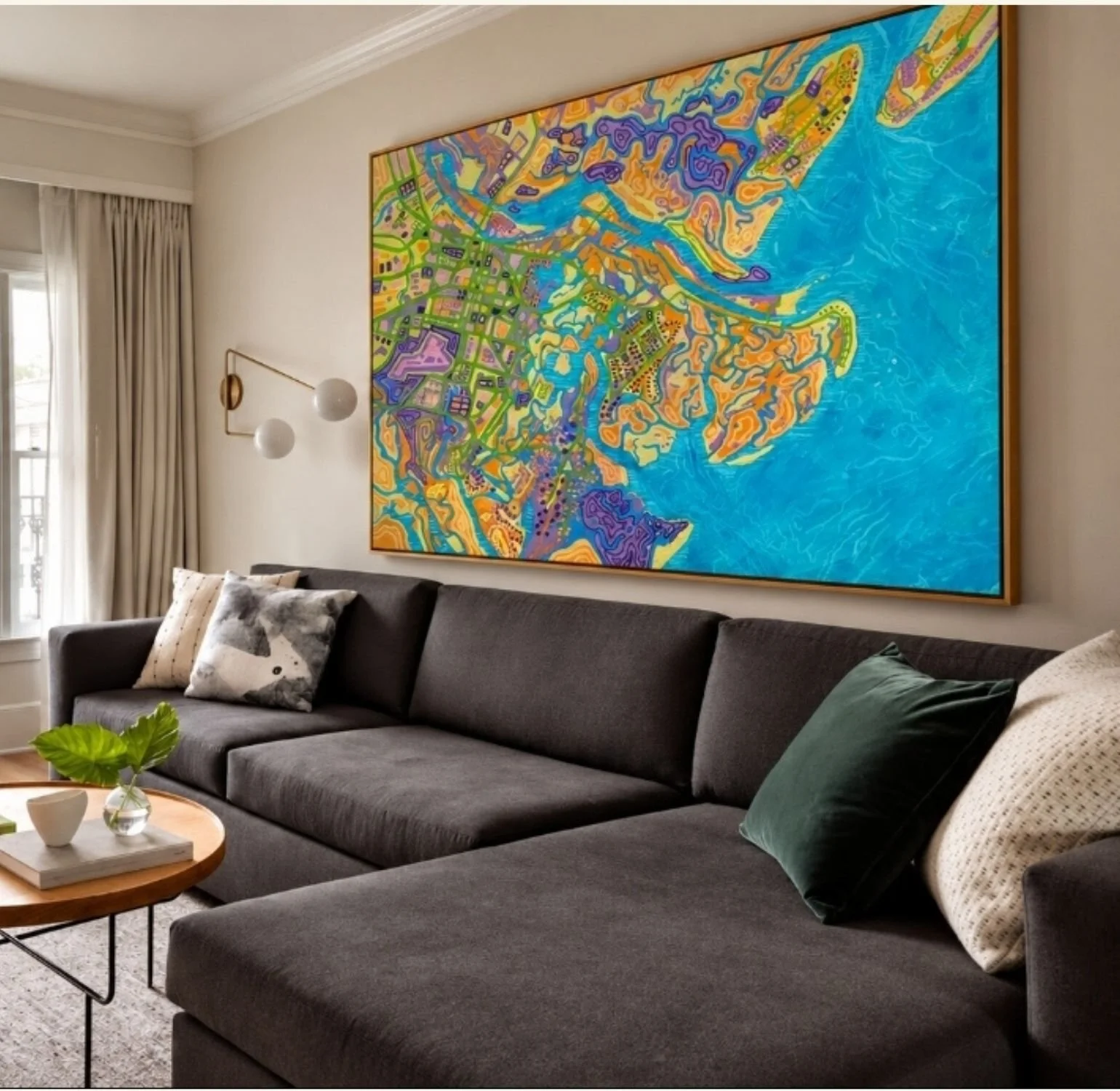
Savannah Artist CLR Creations Expands Global Reach Through Saatchi Art and Artfinder
Savannah-based artist Christina Leigh, founder of CLR Creations, is expanding the reach of her abstract cartography practice through Saatchi Art and Artfinder, connecting her place-centered work with international collectors, designers, and hospitality professionals.
Inspired by travel, memory, and the emotional connection we form with destinations, Leigh transforms maps, shorelines, streets, and waterways into layered paintings that exist between geography and remembered experience. With a background in the hotel industry and a lifelong relationship with travel, she is bringing this work into hospitality spaces through original artwork, destination-specific commissions, and curated collections designed to deepen a guest’s connection to place.
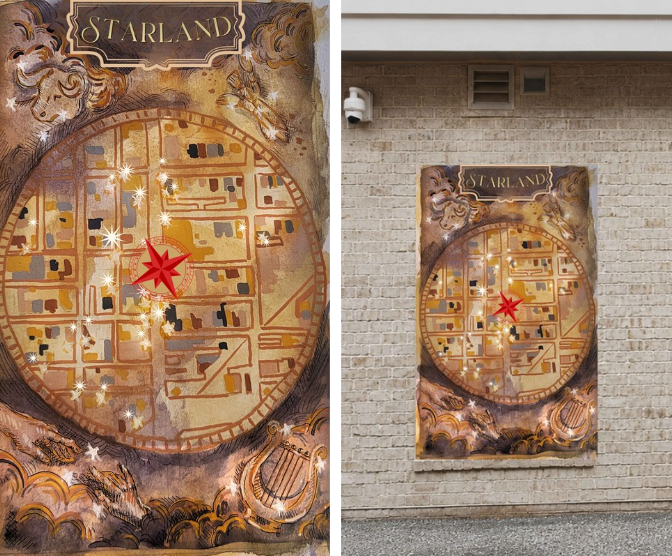
Christina Leigh Selected as Finalist for Inaugural Starland Mural Festival
Savannah artist Christina Leigh of CLR Creations has been selected as one of seven finalists for the inaugural Starland Mural Festival. Her proposed mural, Starland Constellation, transforms the streets of Savannah’s Starland District into a celestial map, connecting the neighborhood’s history, artists, businesses, performers, and community through constellations. At its center, Starland’s historic red star points north, honoring the district’s roots while reflecting the creative community shaping its story today.
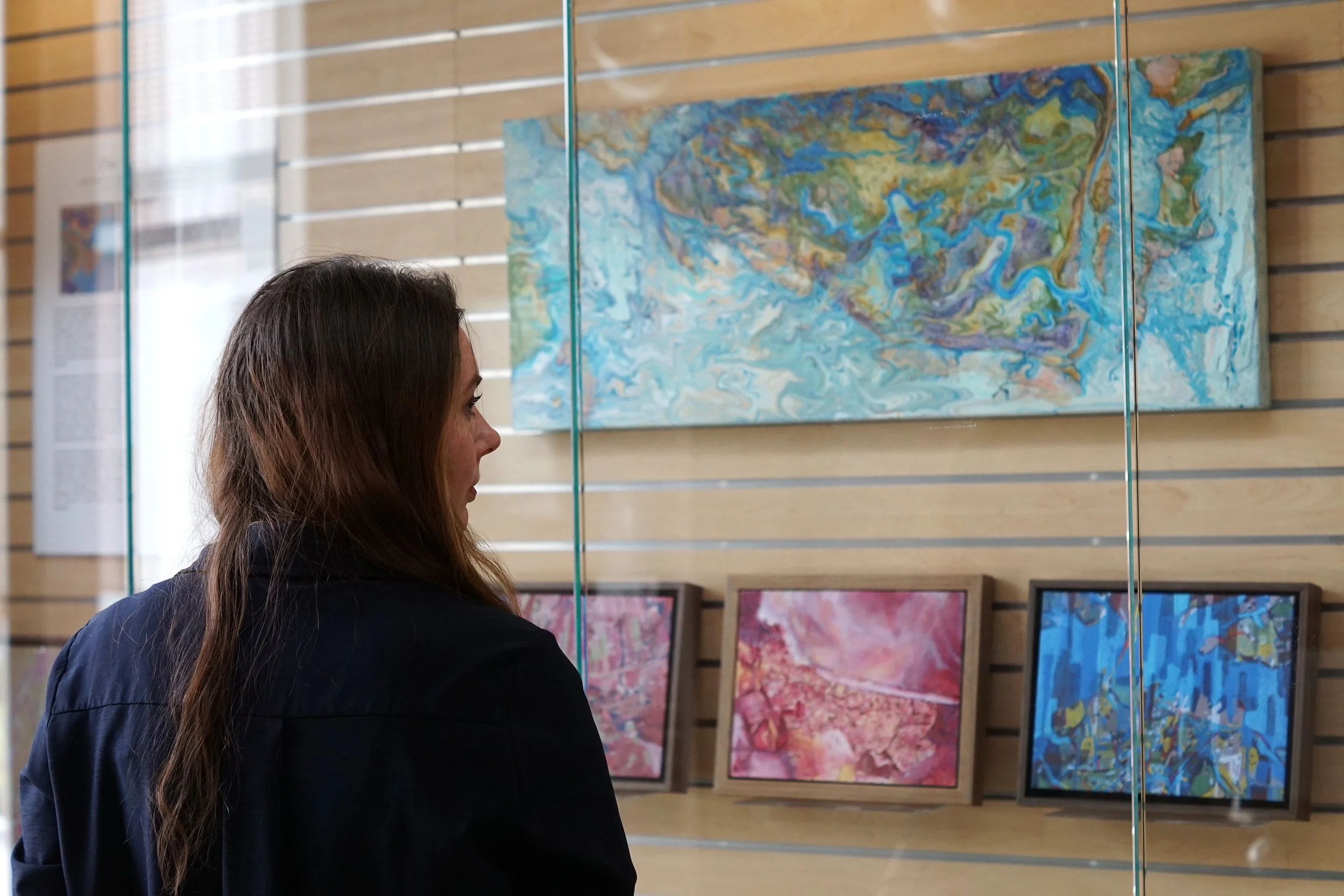
Christina Leigh Explores the Places That Shape Us in “The Places We Carry” at Georgia Southern University
Contemporary artist Christina Leigh, the artist behind CLR Creations, presents “Places We Carry,” a solo exhibition exploring how landscapes, cities, and shared experiences become part of our personal stories. Through abstract cartography, layered textures, fluid color, and geographic detail, Christina transforms maps into records of memory, culture, and connection. Featuring works inspired by destinations near and far, including the developing Savannah Cartography Series: Mapping the Lowcountry, the exhibition invites viewers to consider the places they have encountered, the stories held within them, and what we continue to carry long after we leave.
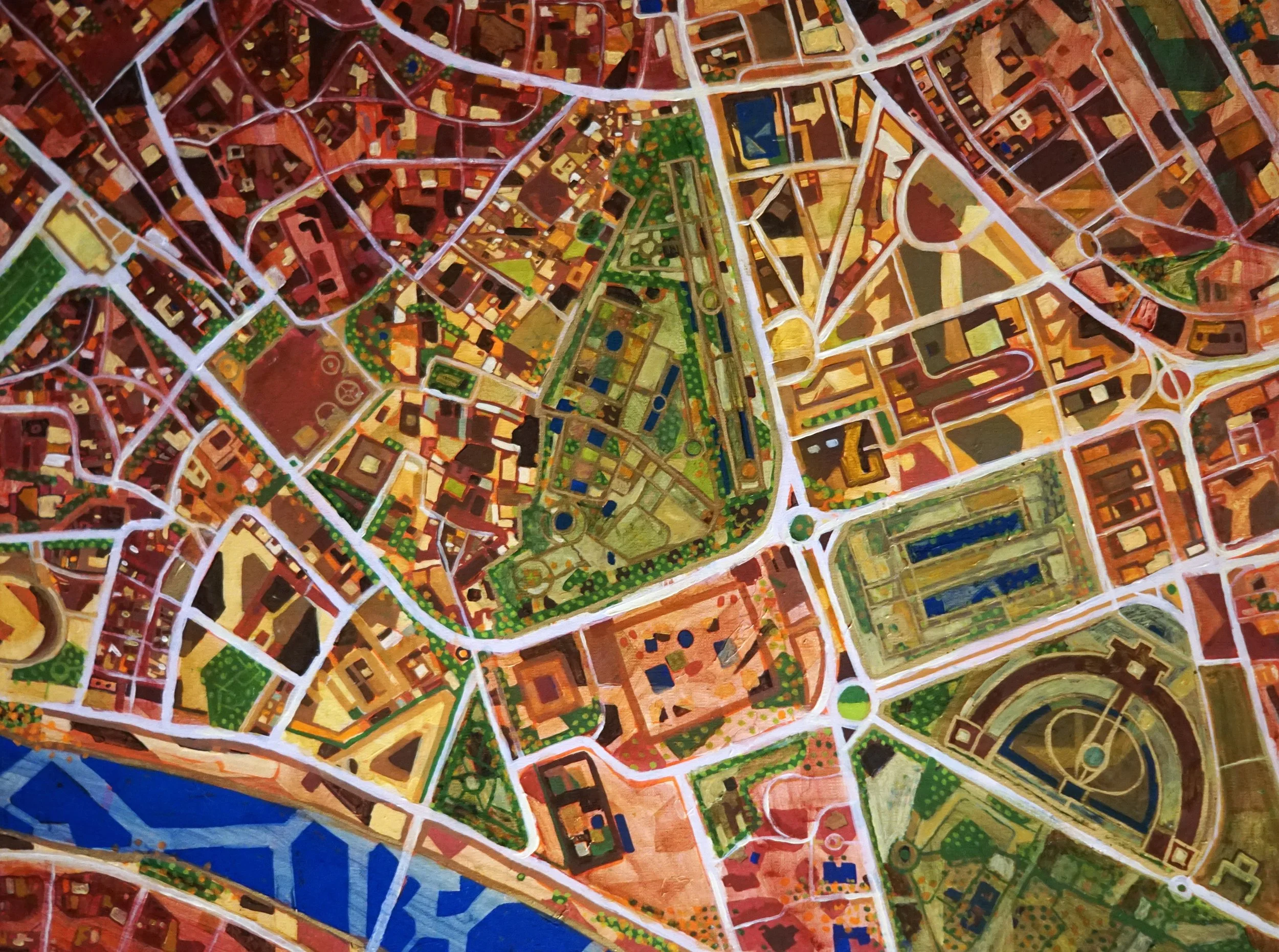
Sevilla Soul: Streets and Stories
Sevilla Soul: Streets & Stories traces the spirit of Sevilla through its winding streets, layered history, architecture, gardens, and gathering places. Terracotta, orange, stone, and shades of green evoke sun-warmed façades, fragrant orange trees, hidden courtyards, and the gardens of the Royal Alcázar, while cobalt blue and white details recall the ceramic tilework of Plaza de España. Landmarks emerge in gold leaf from a city built over Moorish-inspired patterns, reflecting the centuries of history beneath modern Sevilla. Created as a commission for a mother and daughter, the painting becomes a map of shared experience, capturing how a city can live within our memories long after the journey home.
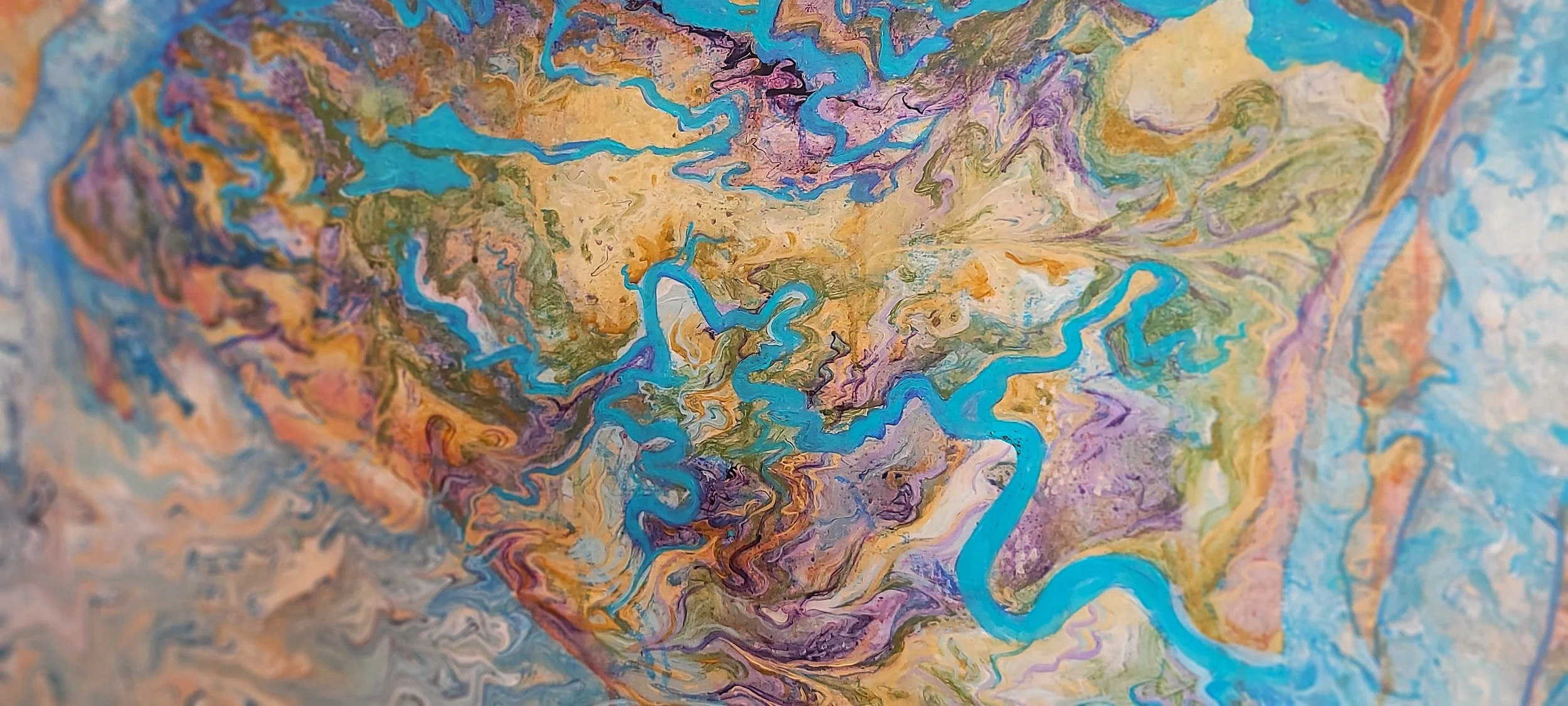
Ossabaw Island: Of Oceans And Oaks
Ossabaw Island: Of Oceans and Oaks explores the quiet movement of one of Georgia’s most significant barrier islands, where maritime forests, winding tidal creeks, salt marshes, and shifting shorelines have been shaped by water and time. Fluid layers of teal, deep purple, soft pink, olive green, and ochre echo the movement of tides and erosion, while the island’s geography emerges through translucent glazes. Beneath the recognizable map, colors continue to flow into one another, reflecting an island whose natural and human histories have accumulated over thousands of years. The painting considers Ossabaw as a living landscape, continually shaped by the ocean, sheltered beneath ancient oaks, and carrying generations of stories within its shores.
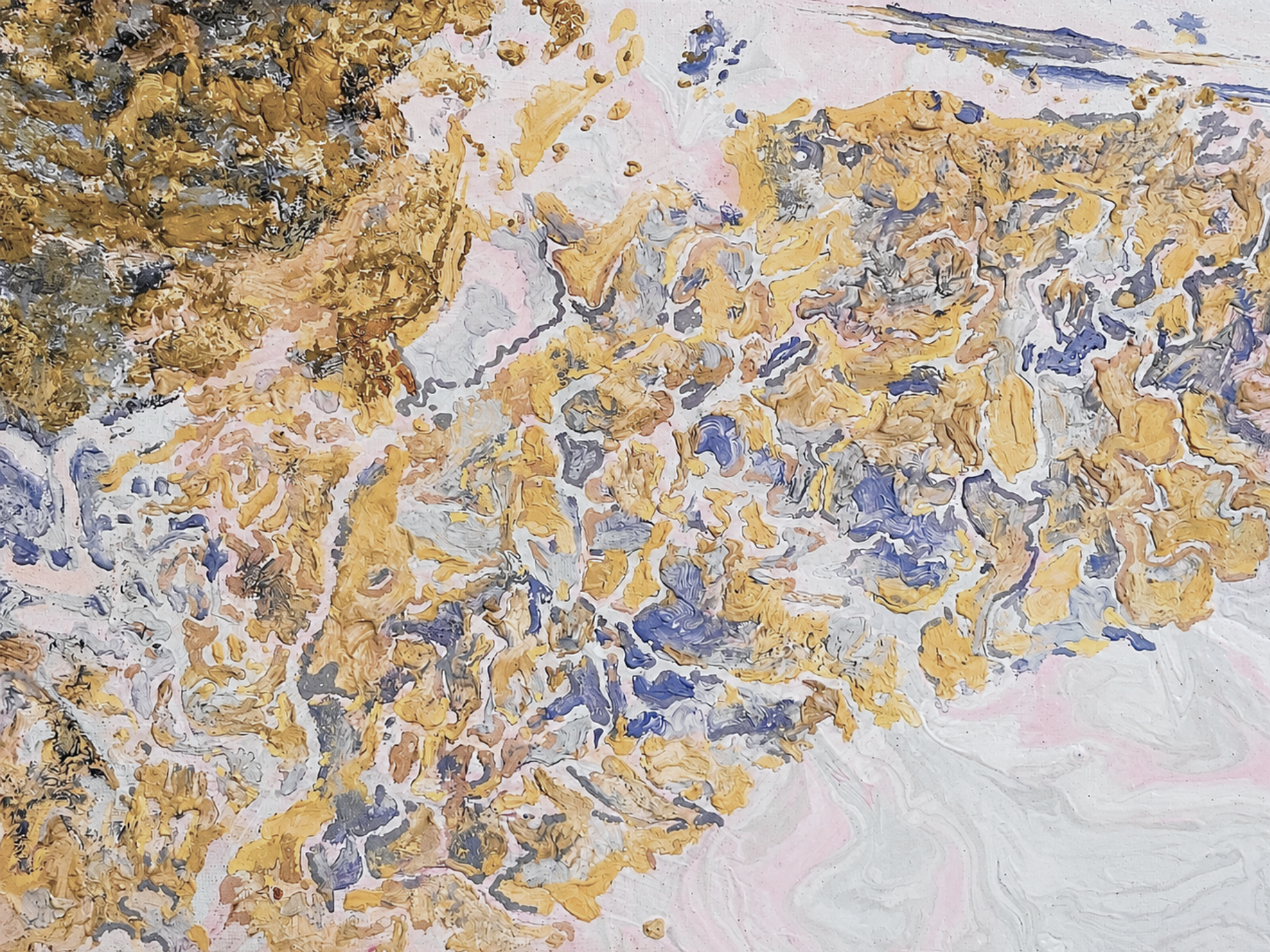
Pin Point: Pearls and Perseverance
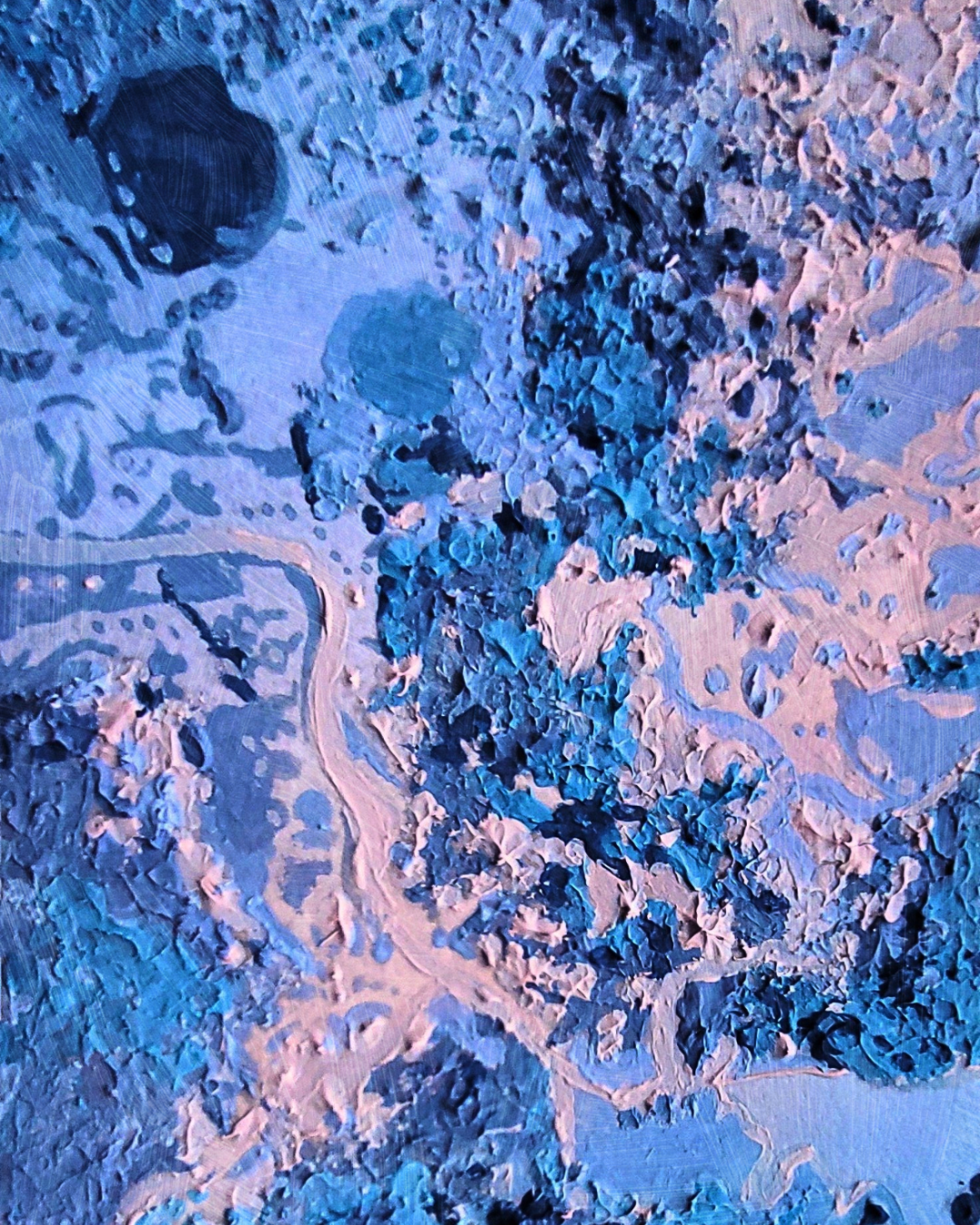
Pin Point: Pearls & Perseverance honors the Gullah-Geechee community of Pin Point, where generations built lives shaped by family, faith, the marsh, and the waters that sustained them. Inspired by the community’s connection to the oyster industry, a soft pearlescent pour recalls the luminous interior of an oyster shell, while gritty impasto echoes its weathered exterior. Layers of pink, lavender, blue, cream, and ochre reflect the beauty held within a history shaped by labor, tradition, and enduring cultural memory. Like the oyster itself, the painting invites us to look beyond the surface and discover the stories, people, and heritage held within.
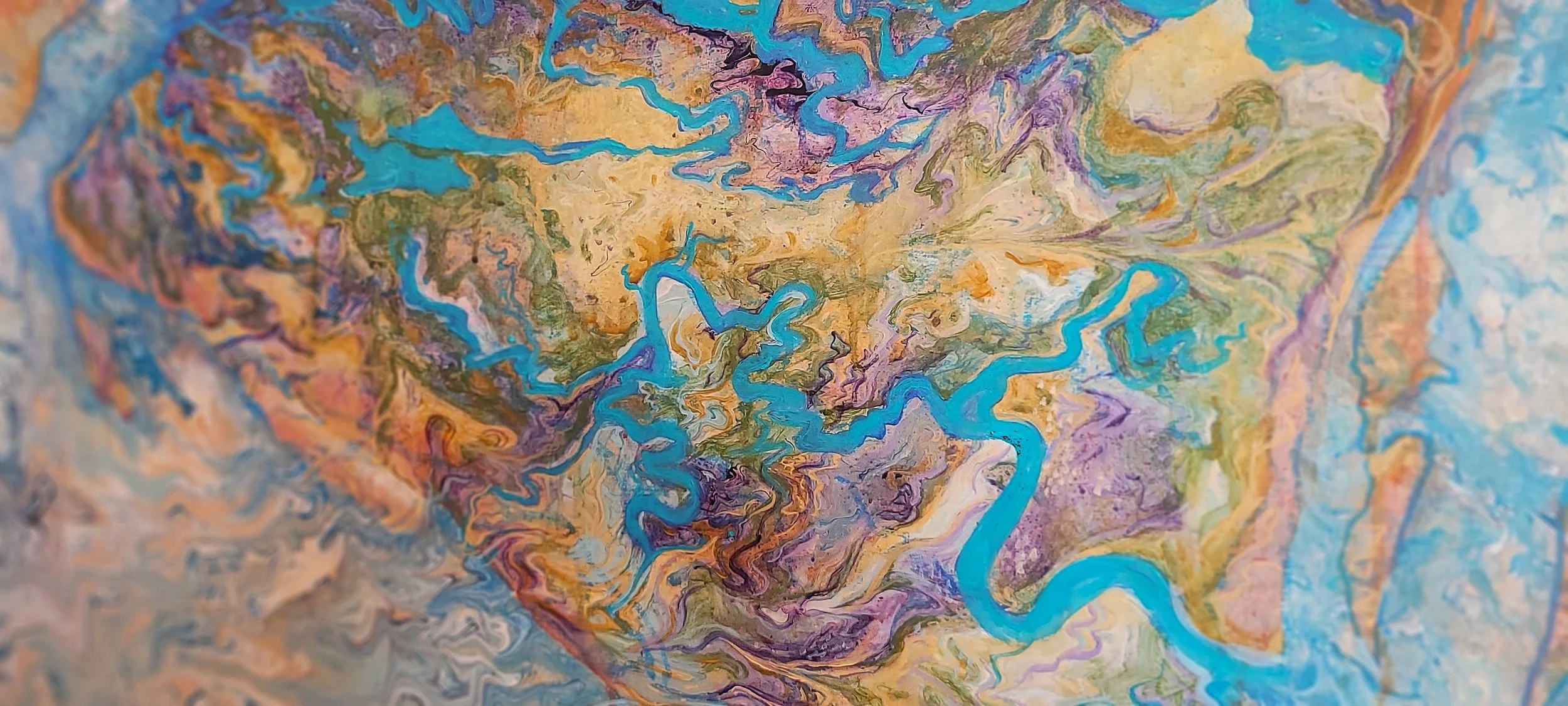
Savannah Artist Launches Crowdfunding Campaign for Savannah Cartography Series
Savannah-based artist Christina Leigh, founder of CLR Creations, has announced the launch of the Savannah Cartography Series, a new collection of six original paintings celebrating the city's history, waterways, ecosystems, and cultural heritage. Through her signature abstract cartography style, Christina transforms maps into richly textured paintings inspired by travel, memory, and the places that shape our lives. The accompanying crowdfunding campaign invites the community to help bring the series to life while preserving Savannah's stories through contemporary art.
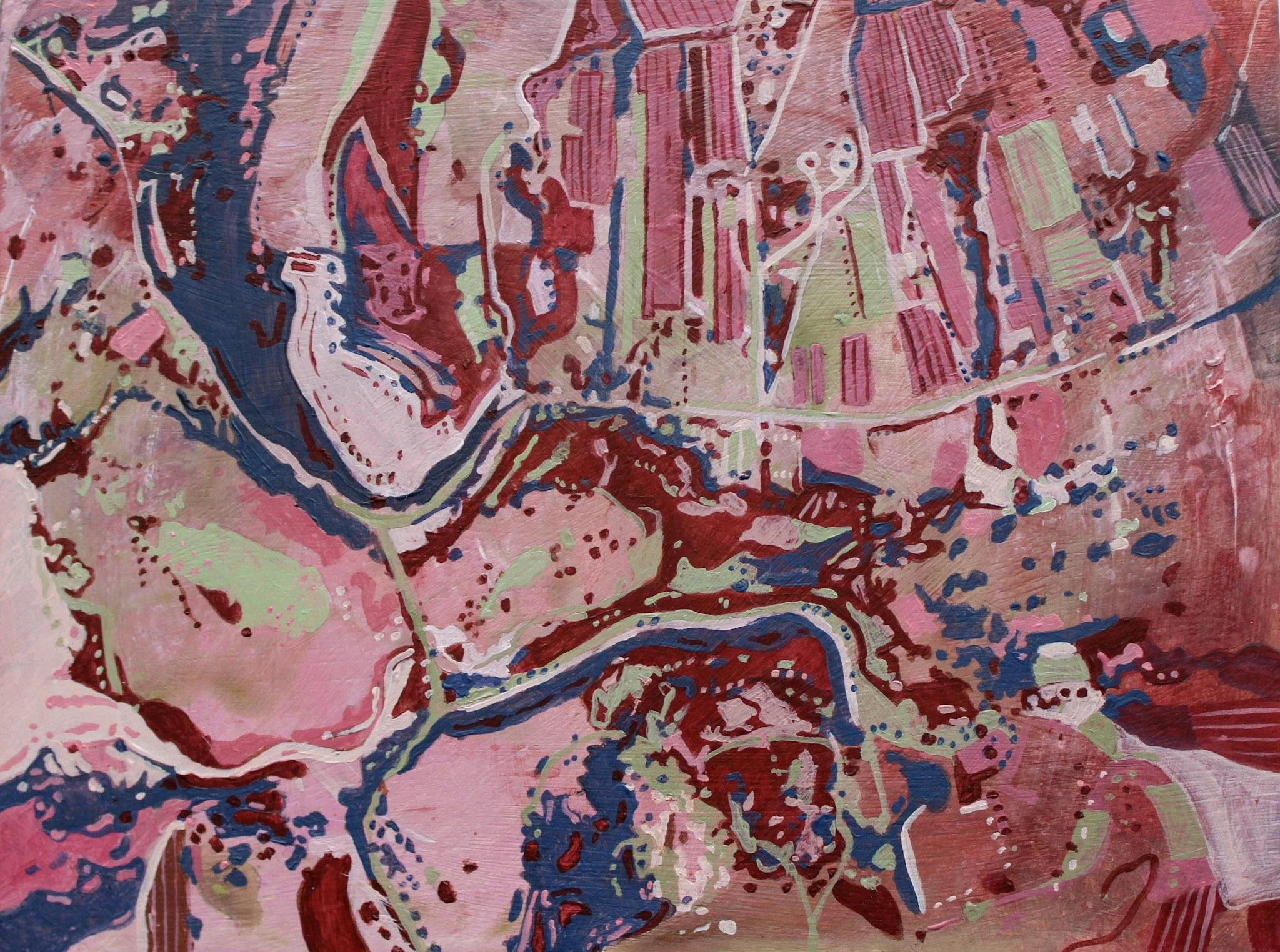
“Tantalus, Waiheke Island, New Zealand” selected for Landscape and Places, an international exhibition by Women in Arts Network.
Christina Robinson's original painting, Tantalus, Waiheke Island, New Zealand, has been selected for Landscape and Places, an international virtual exhibition presented by Women in Arts Network. Inspired by the vineyards of Tantalus Estate in Waiheke Island's Onetangi Valley, the painting transforms landscape into an abstract cartographic memory of place. Through layered textures and a palette influenced by the character of Tantalus Syrah, the work reflects the enduring connection between geography, memory, and lived experience, inviting viewers to consider how the places we visit continue to shape us long after we leave.
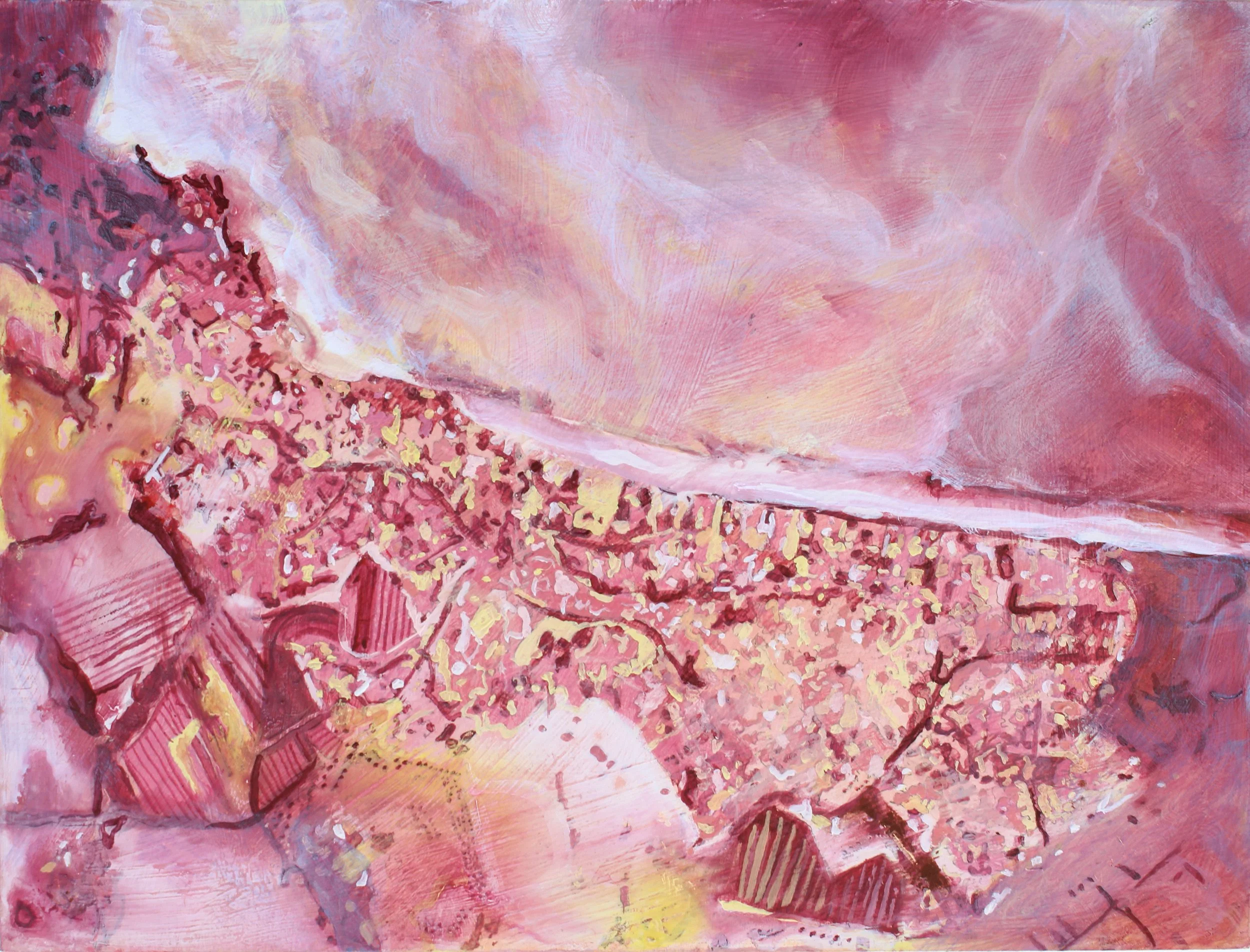
“Little House, Waiheke Island, New Zealand” Selected for Abstract Zone 2026: Experience the Language of Pure Abstraction
Abstract Zone 2024 brings together artists from around the world working across contemporary abstraction in both 2D and 3D media. Presented by Exhibizone, the online exhibition considers color, form, movement, and material as ways of looking beyond direct representation. Included in the exhibition is Little House, Waiheke Island, New Zealand, a painting shaped by time spent at Casita Miro overlooking the vines and sea of Onetangi. Layers of mineral whites, softened pinks, warm reds, and sunlit golds reflect the vineyard landscape, mosaic surfaces, and the atmosphere of an afternoon shared over rosé, conversation, and shifting coastal light.
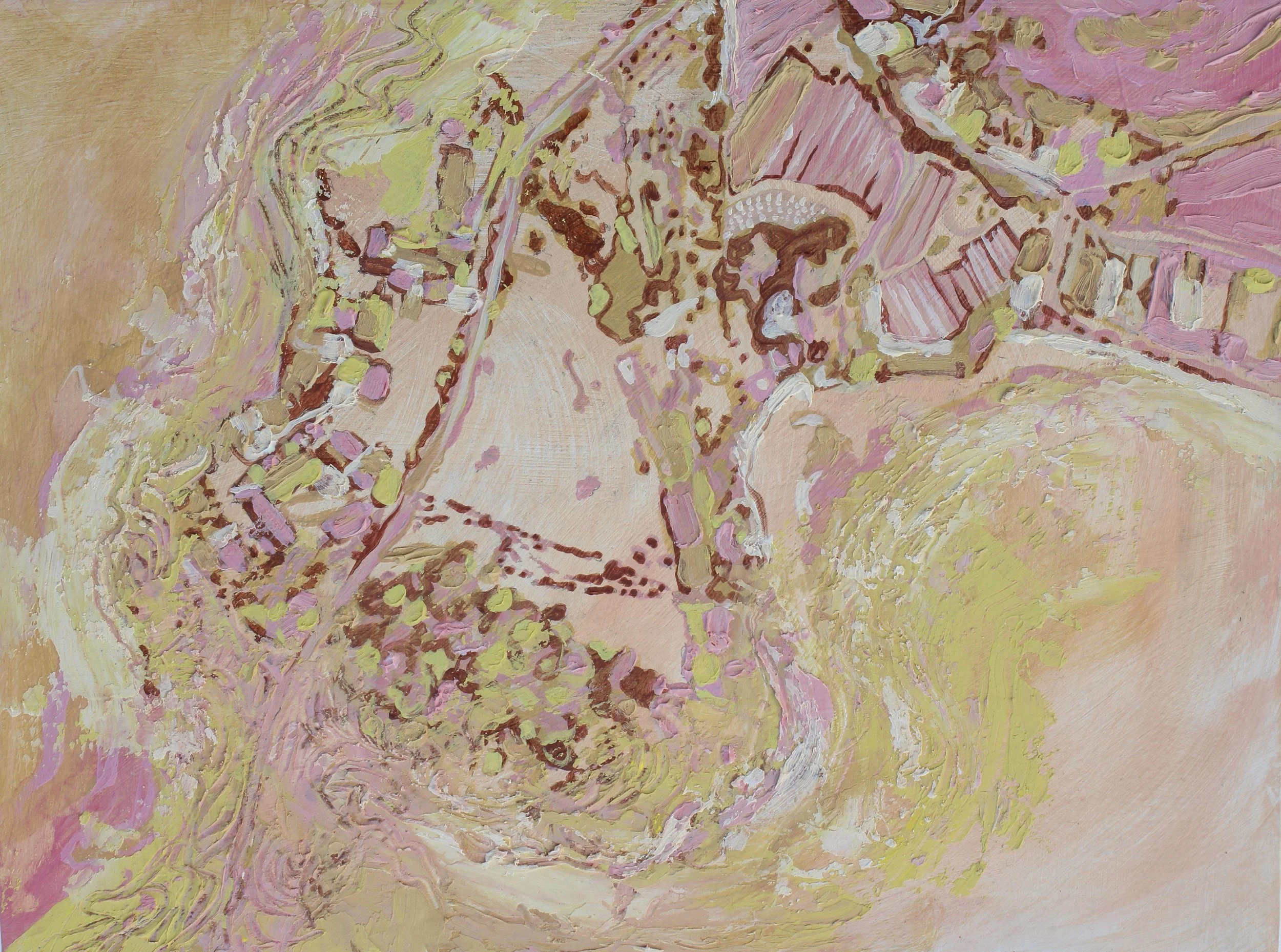
“Goldie, Waiheke Island” Selected for Extinction 2026 Exhibition: A Planet in Fragile Balance
EXTINCTION 2026 brings together artists from around the world responding to the accelerating environmental changes reshaping the planet, from biodiversity loss and rising temperatures to disappearing ecosystems and displaced wildlife. Presented by Gallerium, the exhibition considers how abstraction, material, and atmosphere can hold both warning and remembrance at the same time. Included in the exhibition is Goldie, Waiheke Island, New Zealand, an abstract landscape informed by the sensory experience of a Waiheke Island Pinot Gris. Built through pearl whites, champagne golds, pale apricot, and softened citrus tones, the work reflects the fragile balance between land, climate, agriculture, and memory, drawing attention to places and conditions that feel increasingly vulnerable as environmental pressures continue to shift the landscapes we move through every day.
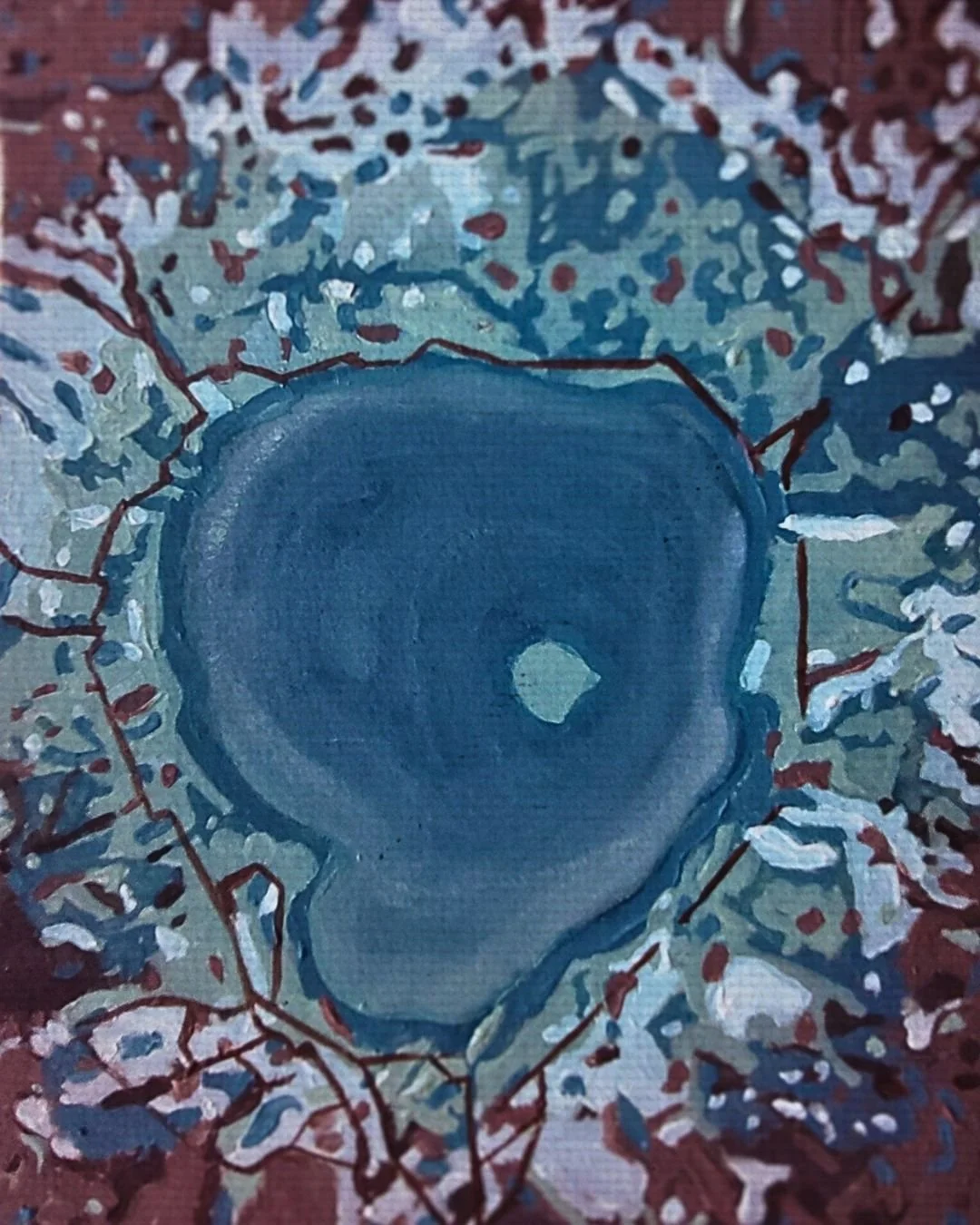
Rotorua and the Living Landscape
Traveling to Rotorua feels different the moment you arrive.
There is a softness in the air, even with the scent of sulfur drifting through town. Steam rises from the ground in unexpected places. Near the lake. Along sidewalks. Beyond fences where the earth quietly simmers.
You notice how close everything feels. Water, forest, geothermal valleys. The redwoods stand tall and steady, while nearby the land bubbles and releases heat from far below. It is a place shaped by forces you cannot see, yet constantly sense.
Mornings arrive with mist hanging low over Lake Rotorua. By afternoon, light catches the steam and turns it luminous. The pace slows without asking you to. You walk more. You look down at the ground more often.
Rotorua is not polished in the way some destinations try to be. It is active. Alive. Layered with history, with Māori culture woven into daily life, not set apart from it.
You leave aware of the earth beneath you. Of how landscapes shape memory long after the trip is over.
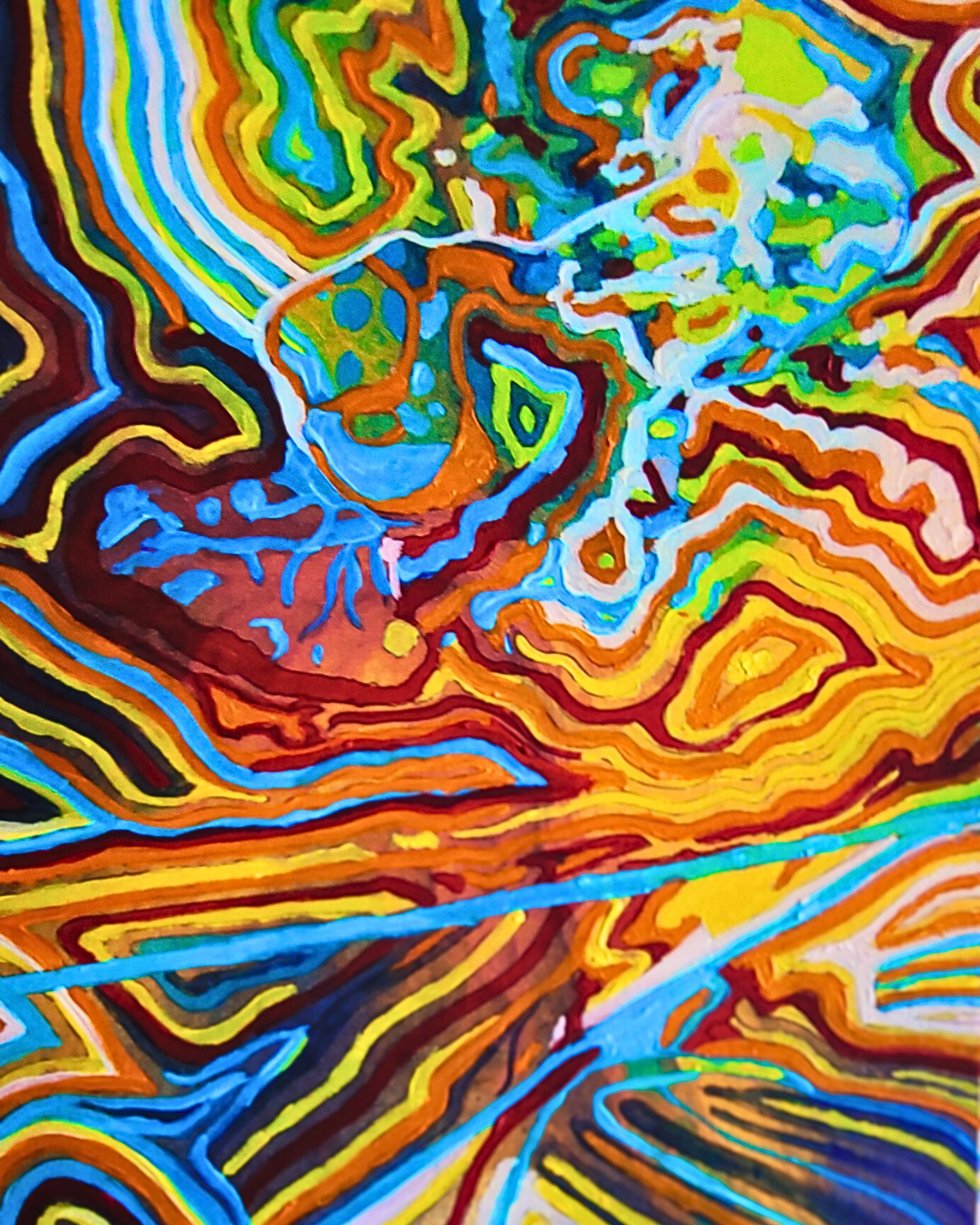
Wai-O-Tapu: Sacred Waters
At Wai-O-Tapu Thermal Wonderland, the ground does not sit still.
Steam rises in slow breaths from the earth.
Mineral pools hold colors that feel almost imagined, soft greens, rusted orange, cloudy blue. The air carries the scent of sulfur, sharp but honest. It reminds you that this landscape is active, alive beneath your feet.
Along the thermal track, the path winds past craters and shifting water. The Champagne Pool rests wide and luminous, its edge traced in bright mineral deposits. Nearby, mud pools fold and release in small bursts, as if the land is thinking out loud.
It is not a place of still surfaces.
Everything here moves, even when it looks calm.
Walking through Wai-o-tapu, you begin to notice how the lines of steam and mineral deposits echo patterns you might later recognize in abstraction. Shapes formed slowly. Colors pulled from deep below. A map written by heat and time rather than roads.
You leave with the sense that the earth has been quietly at work long before you arrived, and will continue long after you’ve gone.
Te Puia and the Living Tradition of Māori Arts
At Te Puia, the land speaks in steam and water.
The valley opens with rising mist and the steady presence of Pōhutu Geyser, sending columns of water into the air at its own rhythm. Mud pools turn slowly. The earth shifts and breathes beneath wooden walkways.
But Te Puia holds more than geothermal ground. Within the New Zealand Māori Arts and Crafts Institute, carving and weaving continue in steady hands. Patterns passed down are shaped again in timber and fiber. Each line carries memory. Each surface shows patience.
There is movement here in many forms. Water rising from deep below. Chisels tracing grain. Voices lifted in song during cultural performance.
You walk through heat and history at the same time. The landscape and the people remain closely tied, each shaping the other across generations.
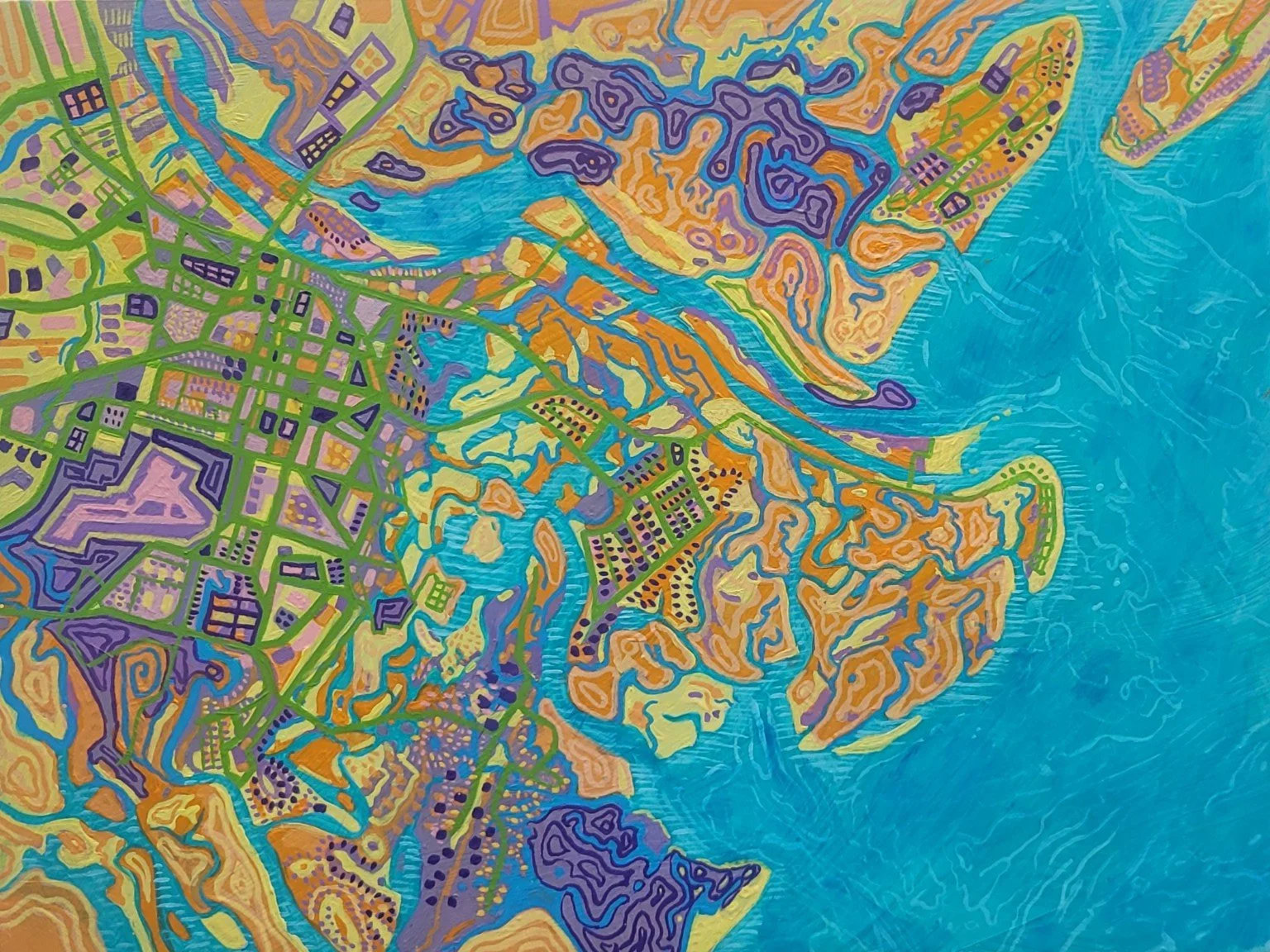
Sweet Savannah: A Candy-Colored Love Letter
Inspired by the candy-colored world of River Street Sweets, Sweet Savannah transforms Savannah's iconic map into a vibrant celebration of memory, place, and wonder. From winding waterways and historic streets to the aroma of freshly made pralines, this artwork tells the story of a city that captured my heart during a magical first visit at sixteen years old.
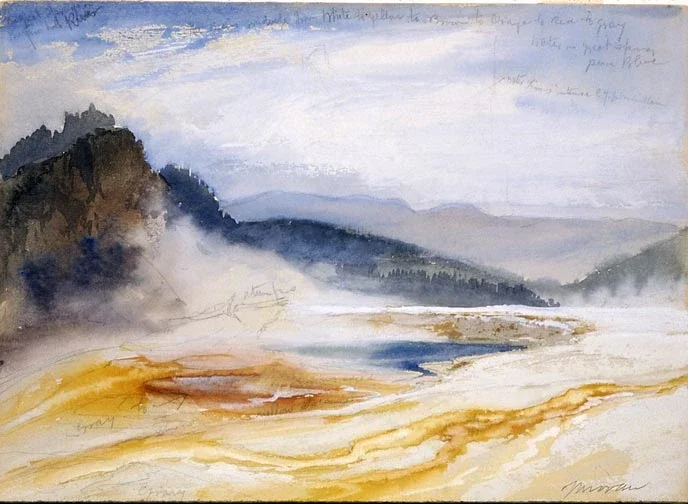
Mapping the Sublime: Thomas Moran, Julius Haast, and the Nineteenth-Century Landscape
This essay examines how Thomas Moran, Julius Haast, and their contemporaries reshaped landscape into a site of inquiry, responsibility, and cultural formation. Through painting, exploration, and scientific observation, land became evidence rather than backdrop, shaping public policy, national identity, and environmental consciousness. Their journals and works reveal a shared conviction that geography carries history, meaning, and consequence beyond human ownership.
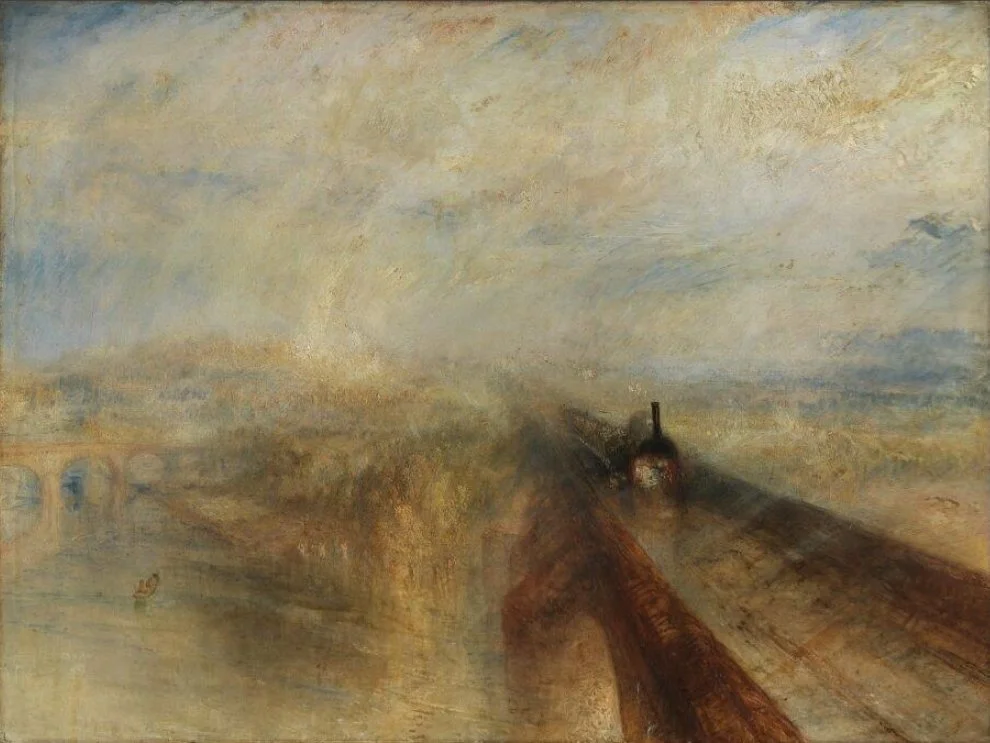
Observation and Atmosphere: J. M. W. Turner, Enlightenment Thought, and the Living Landscape
This essay examines J. M. W. Turner’s position between Enlightenment inquiry and Romantic perception, tracing how observation, scientific curiosity, and philosophical restraint reshaped landscape painting into a site of motion, uncertainty, and meaning. Drawing connections between Turner, European masters held in the National Gallery, the Prado, the Uffizi, and the Vatican collections, the text considers how this lineage continues to inform contemporary approaches to landscape as a living, temporal record rather than a fixed image.
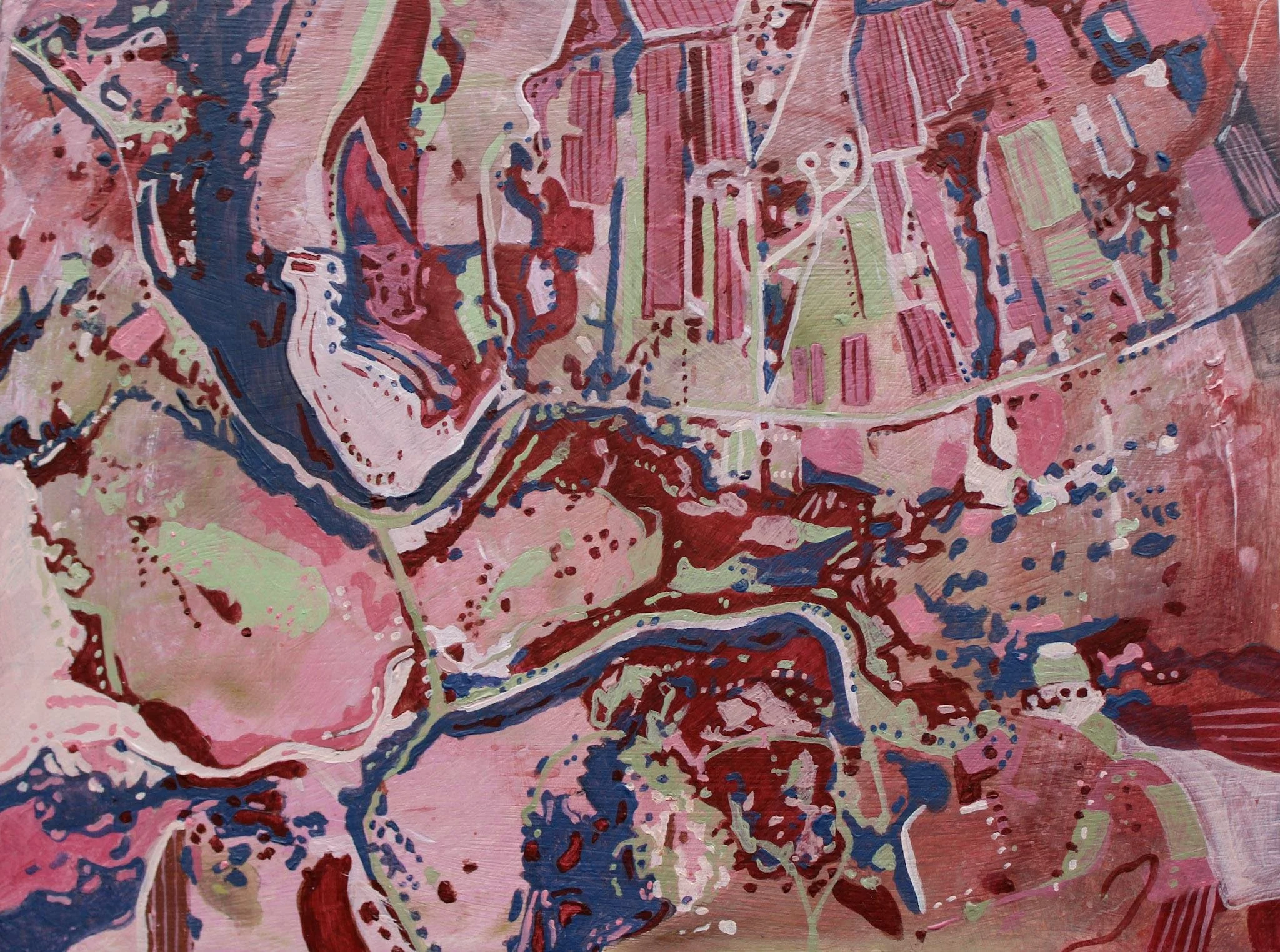
Back to Life: A New Series Unveiled
This series of abstract cartographic paintings emerges from travel through New Zealand, where land, identity, and history remain deeply intertwined. Through layered surfaces and sensorial color, the work maps not fixed locations, but the accumulation of memory, cultural presence, and movement embedded in the terrain. The paintings invite viewers to consider landscape as a living record shaped by geology, human influence, and belief.
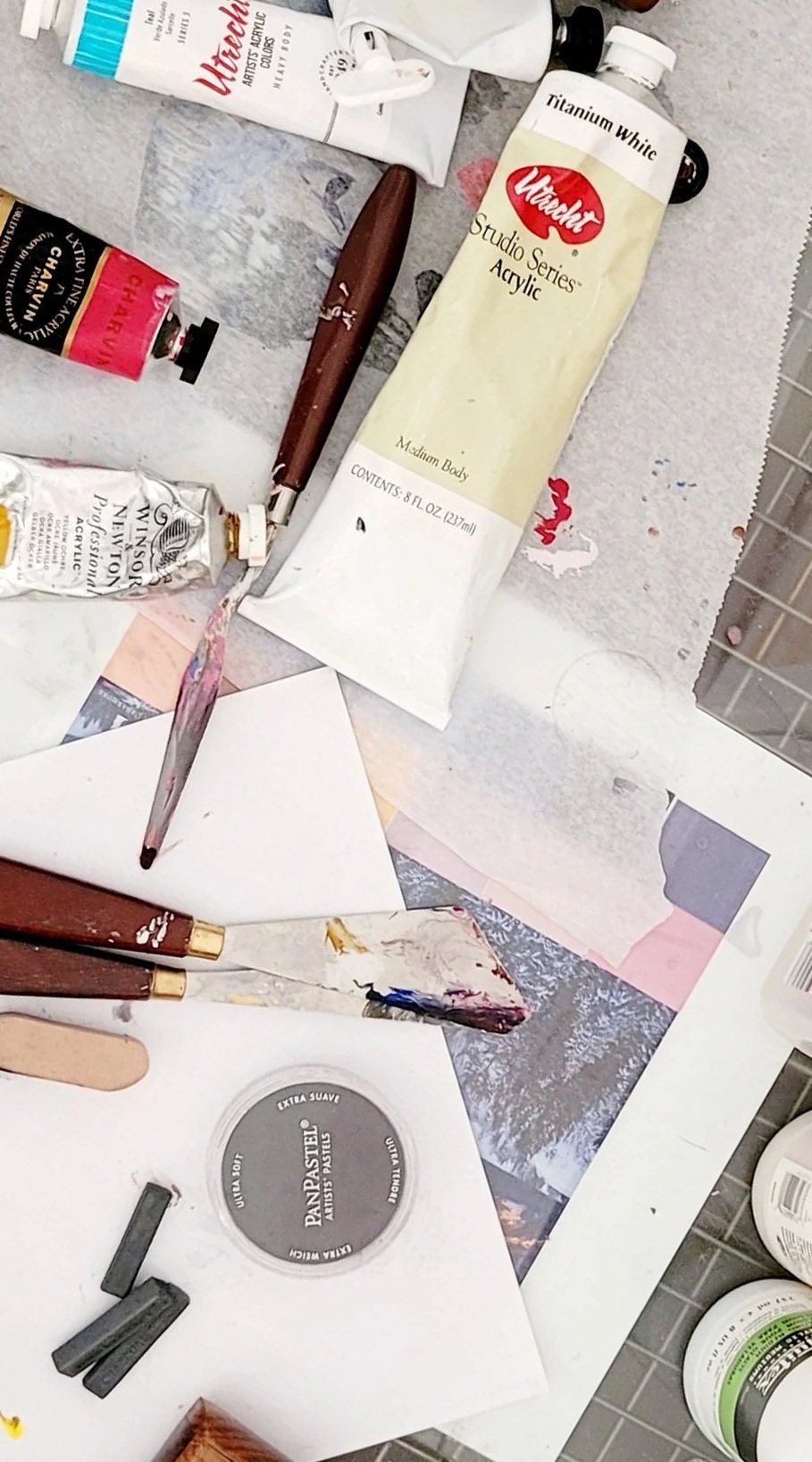
Inside the Process: How the Work is Made
My work is grounded in a research-based process that begins with sustained attention to place and advances through reflection, material negotiation, and restraint. Travel functions as primary research, with sensory and cultural observations internalized rather than illustrated, allowing geography to shape perception before it informs form. Painting unfolds through layered construction and erasure that mirror geological and mnemonic processes, where time, pressure, and presence determine what remains. Color operates sensorially rather than descriptively, structuring atmosphere and movement instead of representation. Each finished work serves as a record of presence, holding the imprint of lived experience and affirming that land, memory, and meaning are formed through accumulation.
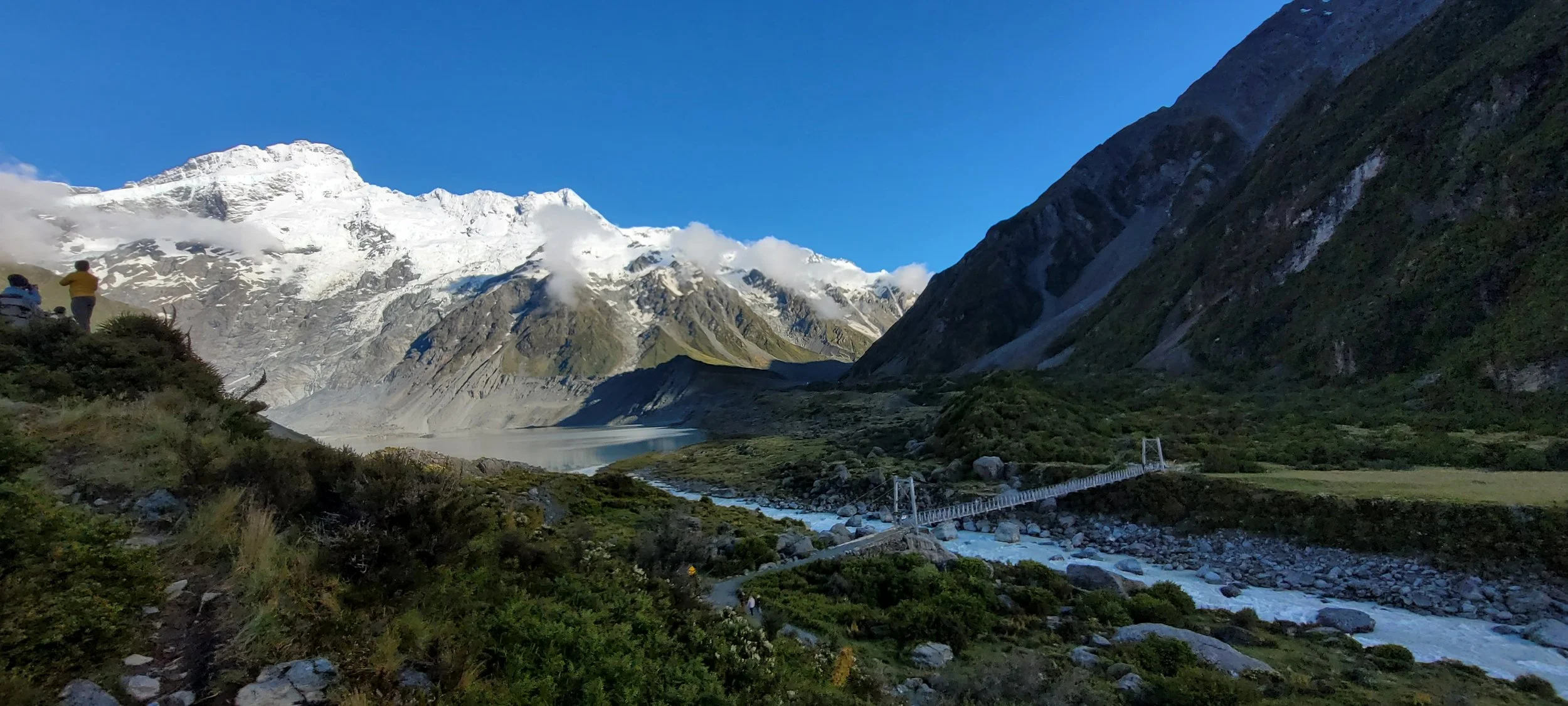
On Being Present: Where Inspiration Really Begins
Inspiration doesn’t arrive as a sudden idea or a finished image. It builds through being present. This essay explores how land, history, faith, and travel shape my work, from the influence of Enlightenment thought and pioneering artists to the lived experience of moving through travel. At its core, it’s about learning how to look, and recognizing that inspiration lives not in answers, but in awe.