Art Education as Structure: Why formal training matters when art is asked to endure
Some paintings hold a room not because of what they depict, but because of how they are built. In spaces that work, whether galleries, hotels, or cozy living rooms, there is a sense of coherence that does not rely on trend or explanation. Art doesn’t need defending, it simply belongs. This quality is rarely accidental.
For those of you who design, curate, or collect work for environments meant to last, this distinction matters. Art that holds a room is often rooted in training that treats creativity not as impulse, but as a system of relationships.
Key Point 1: Education as Framework, Not Style
My early training followed a curriculum structured around three interconnected lines of focus: making, critical analysis, and historical understanding. Productive, critical, and historical thinking were not treated as separate phases, but as a single, continuous practice. Every mark existed in relation to what came before it, what surrounded it, and what it referenced across time.
This kind of education does not teach style. It teaches awareness. It trains the eye to recognize proportion, rhythm, and balance not as decoration, but as language. For interior designers and curators, this is familiar territory. You work within systems every day. Circulation paths. Sightlines. Material dialogue. Art that emerges from structural thinking naturally understands these concerns. When a painting is built this way, it does not chase novelty. It operates more like architecture than ornament.
Does the artwork rely on trend, or does it rely on structure?
Can the work be removed from its moment and still function?
In hospitality spaces I’ve worked in, artwork that endured longest was rarely the most expressive. It was the work that understood proportion, placement, and restraint. The pieces that designers didn’t need to explain.
Key Point 2: Structural Thinking and How We Read Space
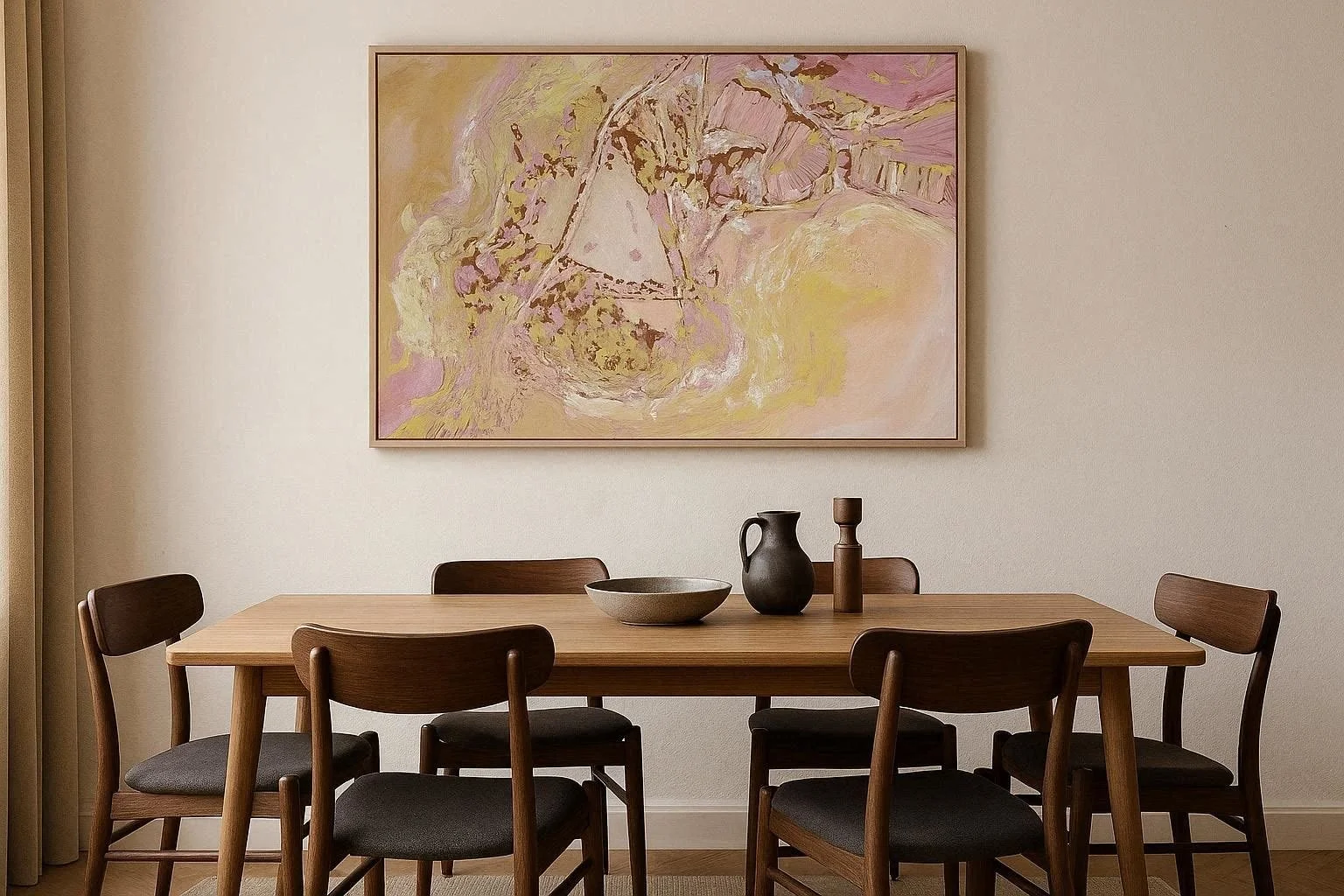
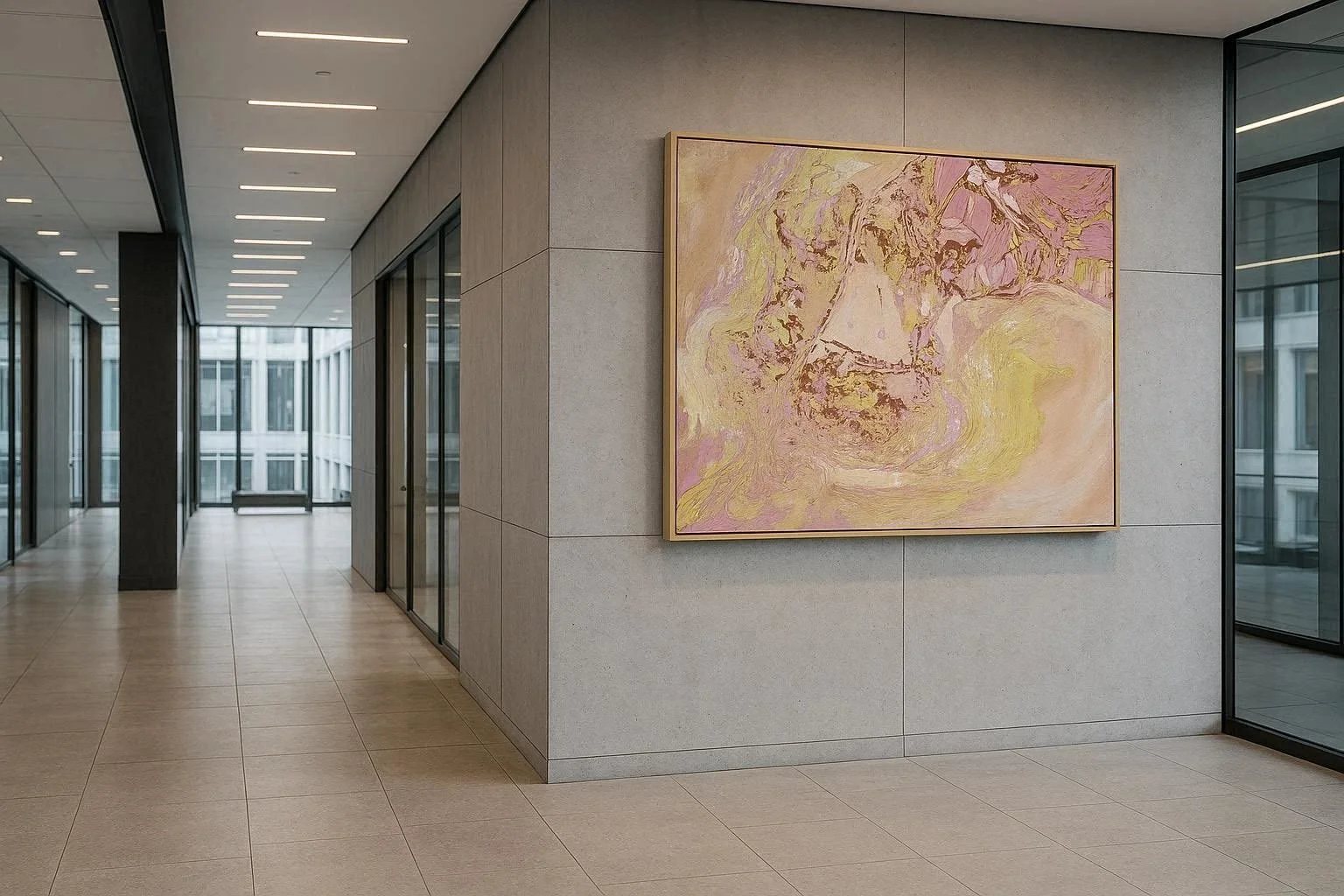
Structuralism, a foundational concept in art history, asks us to look beyond isolated visual elements and instead consider the systems that give them meaning. What matters is not a single line or color, but how elements relate to one another within a cultural and spatial code. This way of thinking changed how I paint and how I understand interiors. A painting does not exist alone. It exists in dialogue with walls, floors, furniture, light, and movement. Structural training makes this unavoidable. You begin to see art less as an object and more as a participant. For collectors and commercial buyers, this is often the difference between a piece that photographs well and one that lives well. Structural work adapts. It holds its ground without overpowering the room, much like a well-designed layout supports use without announcing itself. I often think of anchoring art like grammar in a sentence. You may not consciously notice it, but without structure, meaning collapses.
Key Point 3: Why Arts Education Matters Beyond the Studio
The arts are as old as humanity because they are central to how we make meaning. They engage imagination, curiosity, and empathy in ways few other disciplines do. Anyone who has felt a room quiet during a performance, or sensed time slow in front of a painting, understands this intuitively. Research affirms what many of us experience firsthand: people trained in the arts play a significant role in innovation because they are comfortable navigating complexity, ambiguity, and layered meaning. In the environments you design and curate, these capacities matter. Spaces are not just functional. They are emotional ecosystems.
Formal training taught me to think historically and spatially at once, to see how past conventions inform present decisions, and how today’s choices will age. That perspective matters when art is asked to endure beyond personal taste or trend cycles. When I stepped into hospitality after years of art training, I recognized the overlap immediately. Service design, like art, is relational. It depends on anticipation, restraint, and awareness of the whole system. That realization eventually reshaped my studio practice entirely.
