Pin Point: Pearls and Perseverance
Along the Moon River, just beyond Savannah, there is a place where the landscape and the lives built upon it are difficult to separate. The marsh provided food. The tides determined the rhythm of work. Oysters and crabs became livelihoods. Faith and family held a community together. Stories passed from one generation to another preserved a history that could easily have disappeared.
This is Pin Point.
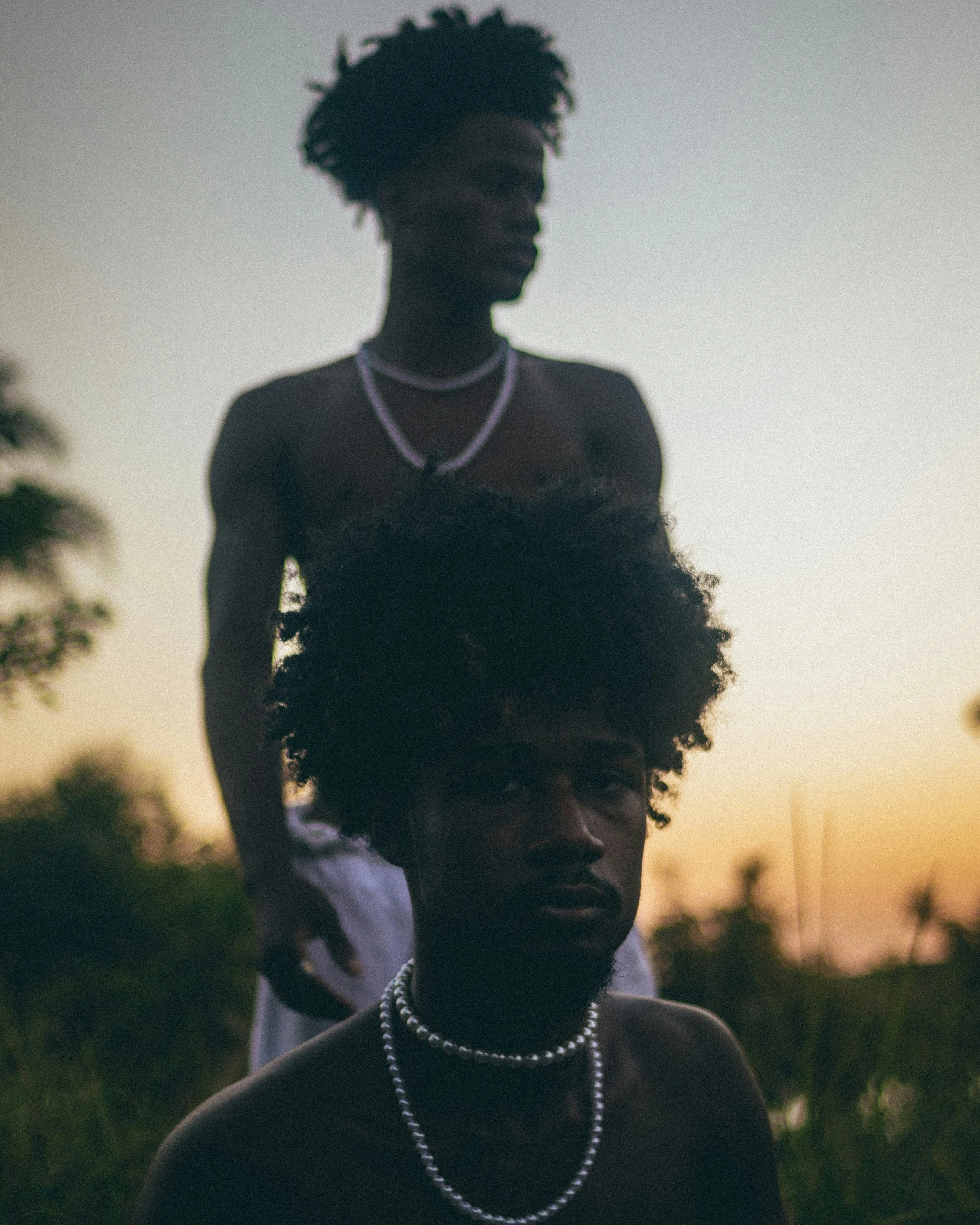
Established in the 1890s by formerly enslaved African Americans and their descendants, Pin Point grew into a close-knit Gullah-Geechee community along Georgia's coast. Its relative isolation helped generations preserve traditions expressed through language, food, faith, work, family, and storytelling. Today, the Pin Point Heritage Museum preserves this history on the grounds of the former A.S. Varn & Son Oyster and Crab Factory.
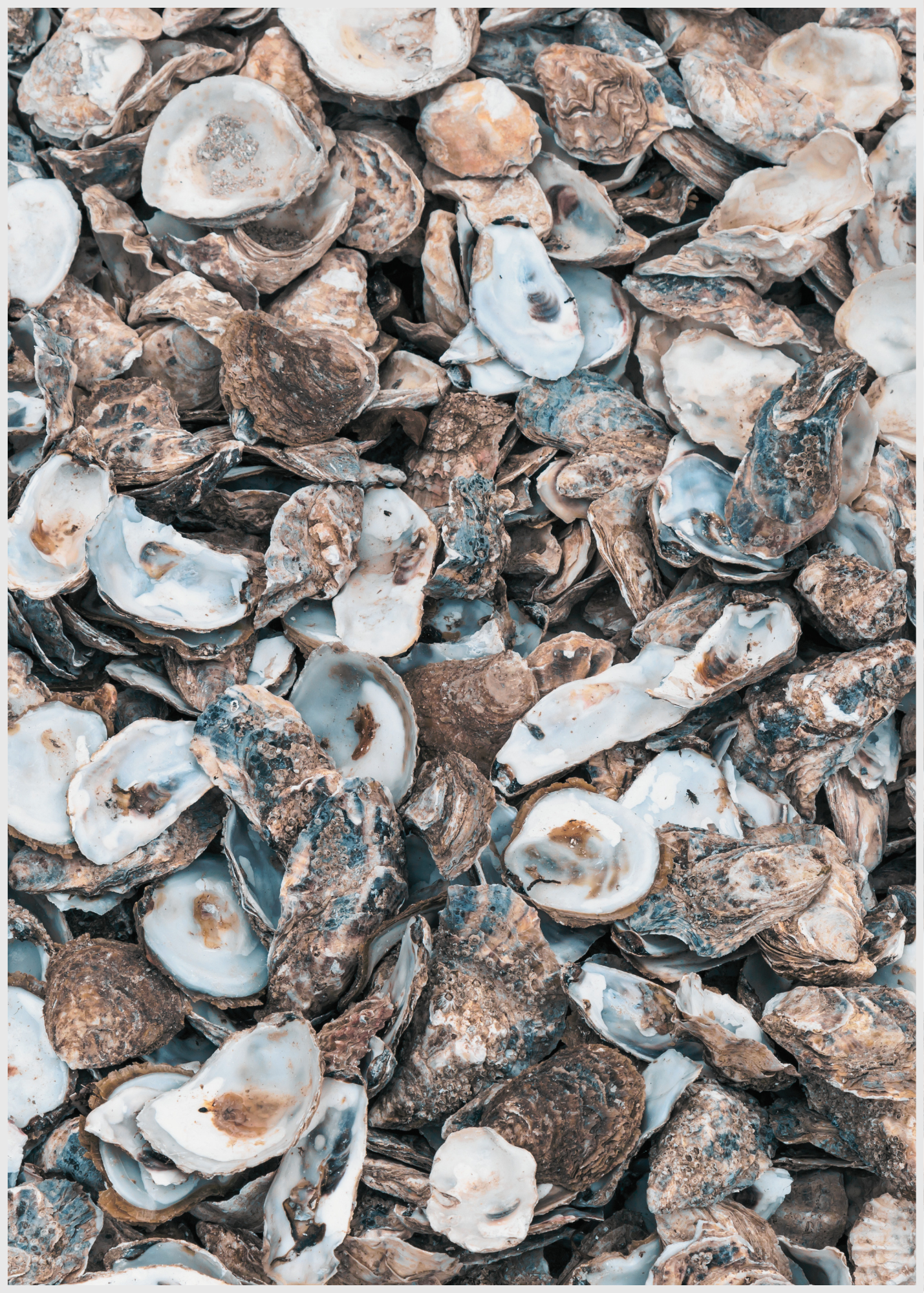
When I began painting Pin Point for the Savannah Cartography Series, I kept returning to one object. The oyster.
A Community Between Land and Water
The story of Pin Point belongs to the larger story of the Gullah-Geechee people, descendants of Africans enslaved on the coastal plantations and Sea Islands of the southeastern United States.
After Emancipation, communities such as Pin Point became places where Black families could build lives with greater independence while maintaining cultural traditions carried across generations. Pin Point's location along the marshes provided access to oysters, crabs and fish, creating an economy intimately connected to the surrounding environment.
The water was part of everyday life. So was the marsh.
The knowledge required to live here was practical and inherited. People understood tides, seasons, fishing, crabbing, oyster harvesting and the changing conditions of the coast. Food traditions developed around what could be harvested locally. Families worked together. Churches provided spiritual and social centers for the community. Language and oral storytelling carried knowledge and memory between generations.
These traditions made Pin Point more than a settlement on a map. They made it a community shaped by place.
The Oyster Factory
Eventually, one place became deeply connected with Pin Point's economic and social life: the A.S. Varn & Son Oyster and Crab Factory.
The factory provided work connected directly to the waters surrounding the community. Oysters and crabs arrived from the local waterways to be processed, packed and shipped beyond Pin Point. For the people who worked there, seafood was more than something harvested from the coast. It helped families build and sustain their lives. The work could be demanding. Oyster shells had to be handled and opened by hand. Behind every finished product were people whose knowledge, skill and labor turned what the marsh provided into an economy. The factory eventually closed in the 1980s. Its buildings remained.
Today, those same structures house the Pin Point Heritage Museum, where the story is told through the place where much of it happened. The museum's exhibits and guided experiences center the voices and memories of residents who grew up in Pin Point, exploring subjects including work, religion, language, food and community life.
How the Painting Came Together
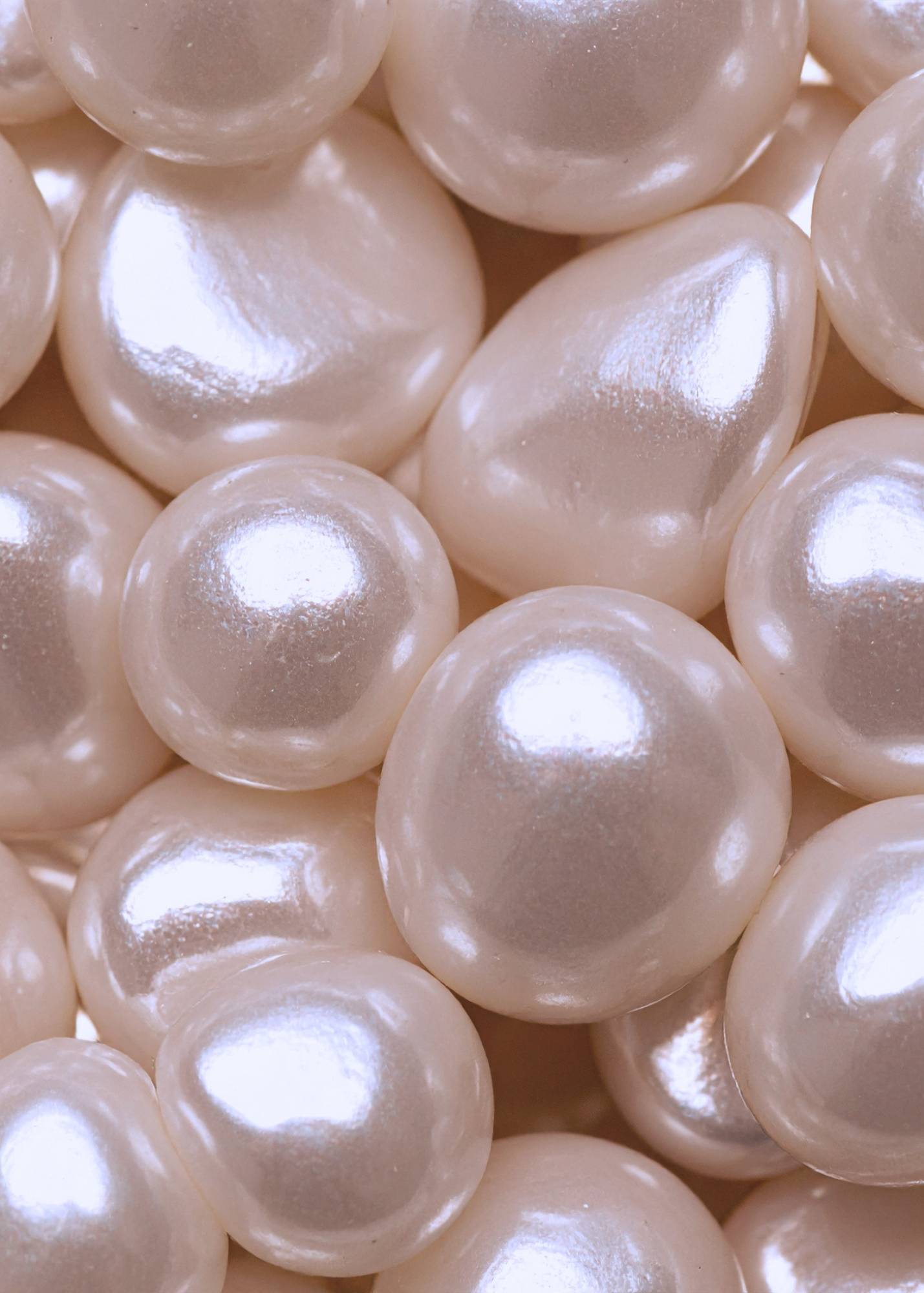
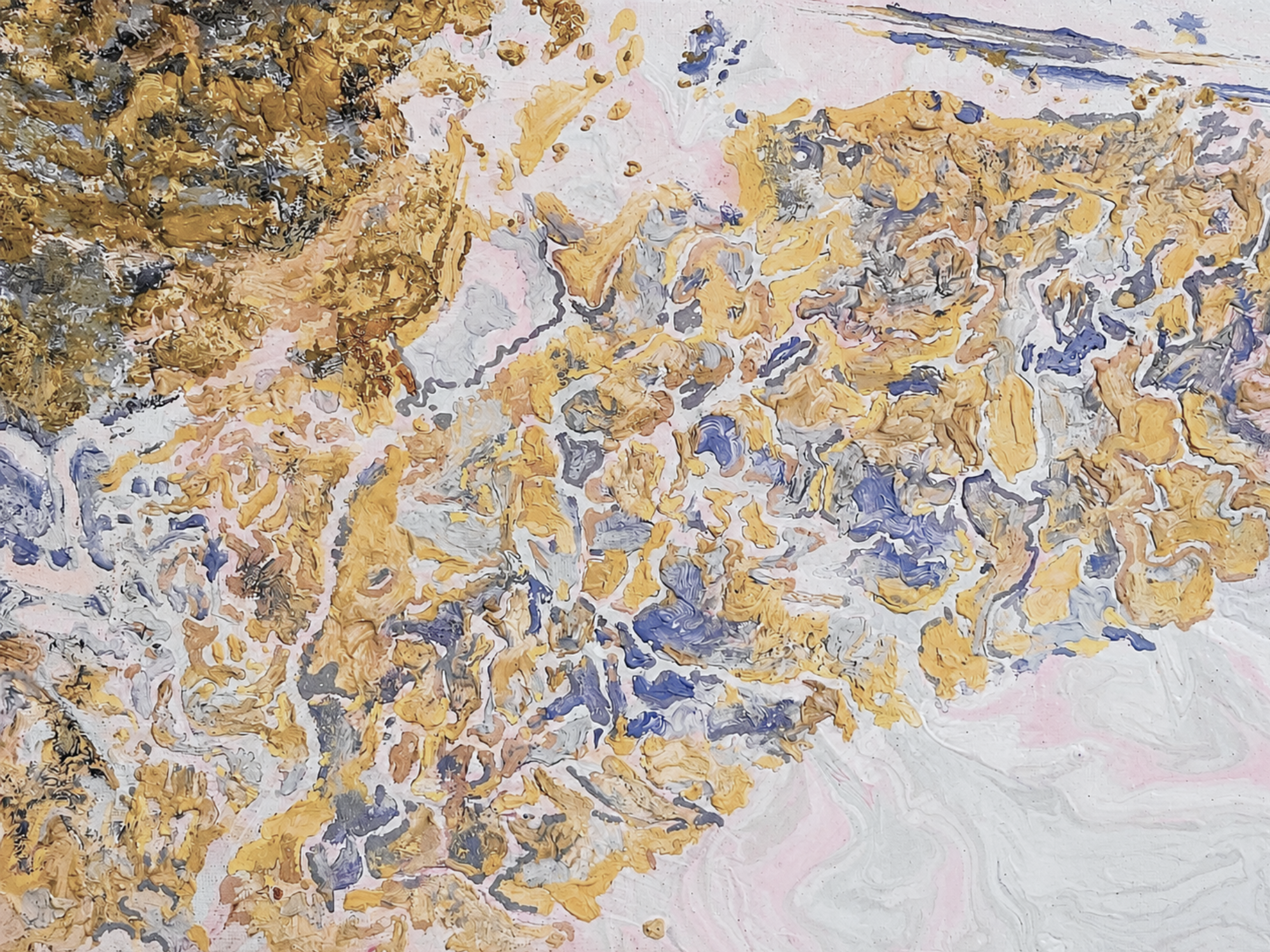
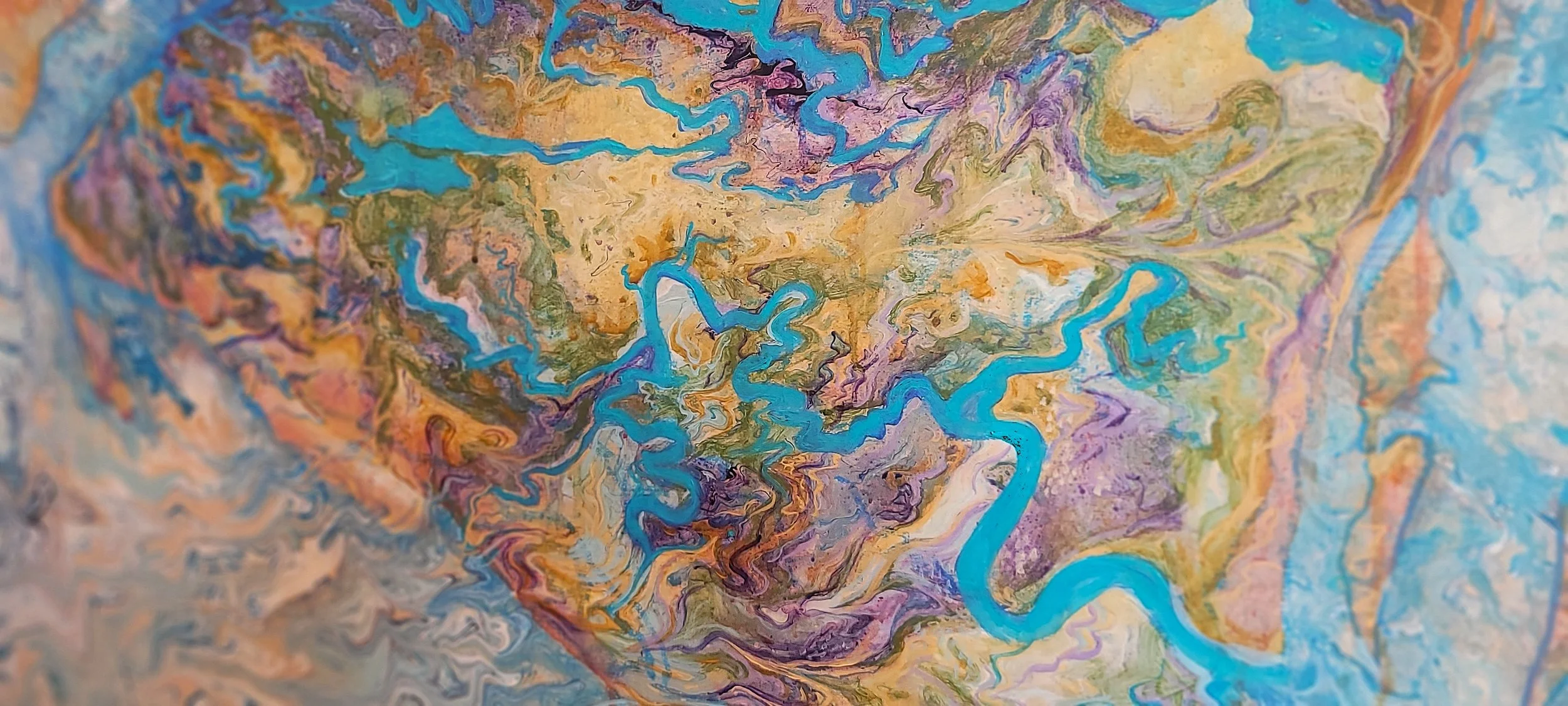
The painting began with the inside of an oyster. I created an abstract pour mixed with pearlescent medium, allowing pale colors to move softly across the canvas. The paint pooled, separated, and melted into neighboring colors, creating an almost luminous surface. Soft pinks appear and disappear among lavender and blue, while warm cream and gold emerge between them. In some areas, the colors feel translucent; in others, they gather into small currents and pools. I wanted the surface to recall the unexpected beauty found when an oyster shell is opened. Its interior can be smooth and luminous, carrying subtle shifts of pink, cream, silver, blue, and violet.
Over that soft pearlescent foundation, I introduced a gritty impasto medium. The material was pushed, scraped, and layered across the canvas, creating irregular ridges and rough passages that reference the exterior of the oyster. An oyster shell is rarely delicate from the outside. It is coarse, uneven, and marked by its environment. Layers accumulate as the animal grows, and its surface records years of contact with water, sediment, and other shells. The relationship between these two surfaces—the rough exterior and luminous interior—became the visual language of the painting.
This physical contrast offered a way to think about the history of Pin Point and the Gullah-Geechee community that has called this coastal landscape home. The families who built and sustained this community carried histories shaped by enslavement, Emancipation, segregation, demanding physical labor, economic change, and the continuing pressures placed upon historic coastal communities. There is weight in that history, but there is also extraordinary cultural richness: language, faith, food, family, music, storytelling, knowledge of the land and water, and generations of memory. Rather than illustrating those histories literally, I wanted the painting to hold them through material.
The rough impasto carries weight and resistance. It recalls the exterior of the shells handled by generations of workers and the physical labor associated with the seafood industry. Beneath and between those heavier passages, pearlescent color continues to appear. The softness remains visible through openings in the textured surface, allowing light to catch the painting differently depending on where the viewer stands. Colors emerge from beneath the texture and then disappear again, much like memories that can be partially hidden yet remain present beneath the surface.
The palette is rooted in the landscape of Pin Point. Pearlescent white creates the foundation, referencing the smooth interior of the shell and the light reflected across coastal water. Soft pink brings warmth into the surface, recalling the subtle blush found inside oyster shells. Lavender and blue move through the composition like water, connecting the painting to the Moon River, tidal creeks, and the surrounding marsh landscape. Gold and ochre gather across the textured areas, bringing earth, age, warmth, and the accumulation of time into the piece. Gray and deeper neutral tones settle between the brighter colors, recalling oyster shells, mud, sediment, and the working landscape of the coast.
Together, the rough and luminous surfaces create a visual tension that is central to the story of Pin Point. What appears weathered from the outside can hold extraordinary beauty within. What may seem like a simple shell can contain layers of history, labor, resilience, culture, and memory. In that way, the oyster became more than a visual reference for the painting. It became a metaphor for a community whose history carries both the marks of what it has endured and the beauty of what it has preserved.
Like the oyster itself, its story asks us to look beyond the surface.
Help Bring the Savannah Cartography Series to Life
Become a founding supporter of the Savannah Cartography Series, a new collection of original abstract cartography paintings celebrating the history, ecosystems, and cultural heritage of Savannah, Georgia.
This six-painting collection explores the city's winding waterways, salt marshes, historic neighborhoods, and the stories that have shaped Savannah for nearly three centuries. Beginning with real maps and transformed through layered acrylic textures, each painting reflects the relationship between geography, memory, and identity.
Your contribution directly supports the research, design, and creation of the series, including archival materials, studio time, documentation, and exhibition preparation.
As a thank you for supporting independent art, every contributor will receive behind-the-scenes updates throughout the project, offering a first look at sketches, studio progress, and the stories behind each painting. Higher contribution levels include additional rewards such as limited-edition prints, postcard sets, early access to original works, and collector experiences.
Whether you have called Savannah home for decades, discovered its beauty while traveling, or simply believe in preserving meaningful places through art, your support becomes part of the story behind this collection.
Campaign Goal: $7,900
The Collection
Four original 9 × 12 inch paintings
One original 18 × 24 inch painting
One signature 18 × 36 inch painting of Ossabaw Sound
Together, these works will celebrate Savannah through its rivers, marshes, parks, neighborhoods, and the people whose stories continue to shape the city.
Thank you for helping transform maps into memories and preserving the spirit of Savannah through art.
Please note: This listing represents a crowdfunding contribution to the Savannah Cartography Series. Reward fulfillment and project updates will be provided according to the campaign timeline.
