Te Puia and the Living Tradition of Māori Arts
Steam moves slowly through the valley at Te Puia. The ground releases warmth beneath each step, and the air carries the mineral scent of the geothermal earth. In the distance, geysers rise in quiet intervals, sending water and steam upward before settling again into stillness. Between these moments of motion, carved wooden meeting houses and workshops stand grounded in deep cultural tradition.
Te Puia and the Living Tradition of Māori Arts
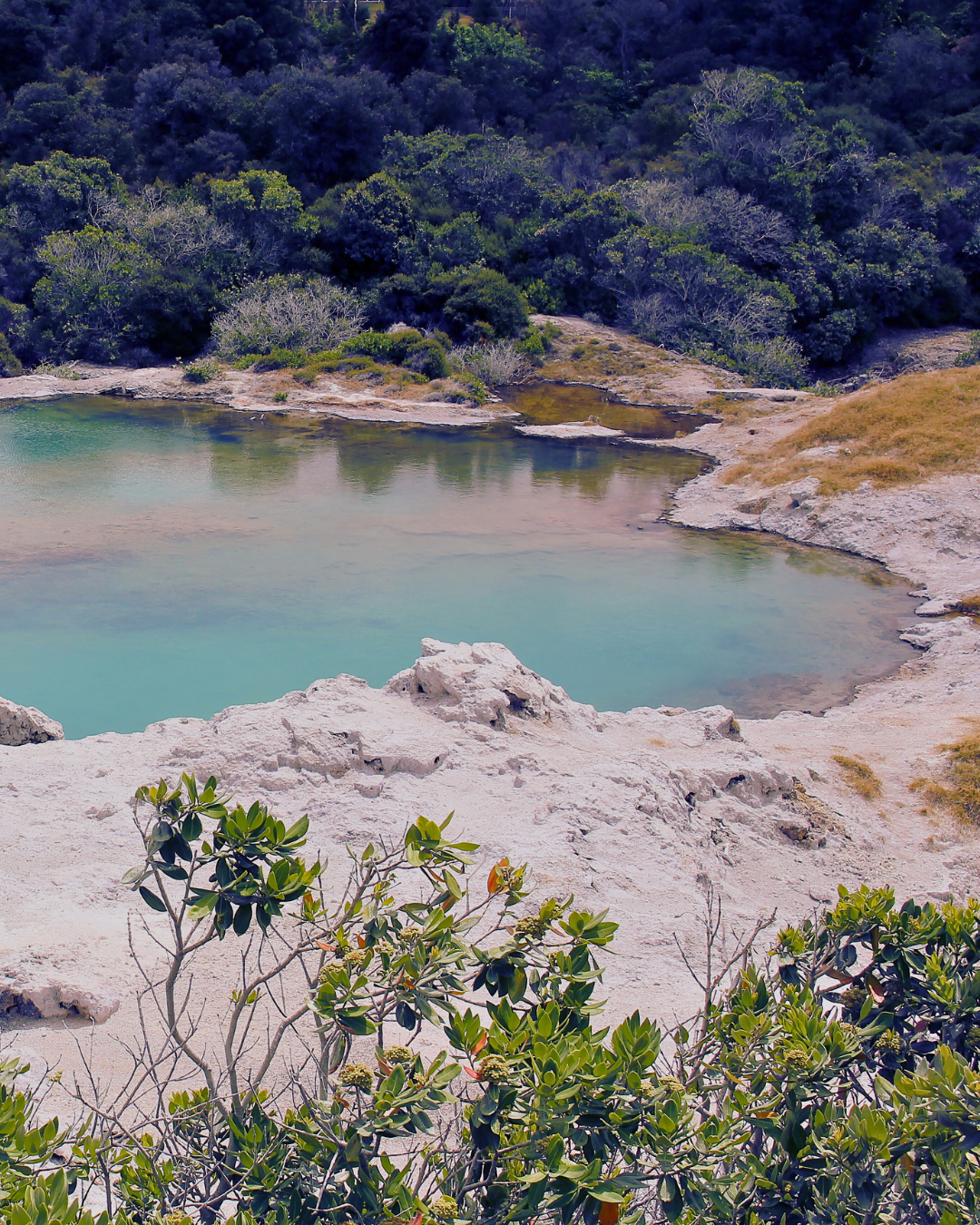
Te Puia sits within the geothermal valley of Whakarewarewa in Rotorua, one of the most culturally significant landscapes in Aotearoa New Zealand. The land is closely connected to the iwi of Ngāti Whakaue, whose ancestors have lived among these geothermal springs for generations. Here, the earth’s geothermal energy has long shaped daily life. Hot pools were used for bathing and healing, while natural steam vents allowed food to be cooked within the ground itself.
At the heart of Te Puia stands the New Zealand Māori Arts and Crafts Institute, an institution dedicated to preserving and teaching traditional Māori art forms. Established in 1963, the institute was created to ensure that skills such as whakairo (wood carving) and raranga (weaving) would continue to be passed from master artisans to future generations.
Walking through the workshops, visitors can watch students and master carvers working slowly through large pieces of native timber. Every carved form carries meaning. Spirals represent ancestry and growth. Figures along the beams of meeting houses embody ancestors who continue to watch over their descendants. The work is patient and precise, shaped through years of training and cultural knowledge.
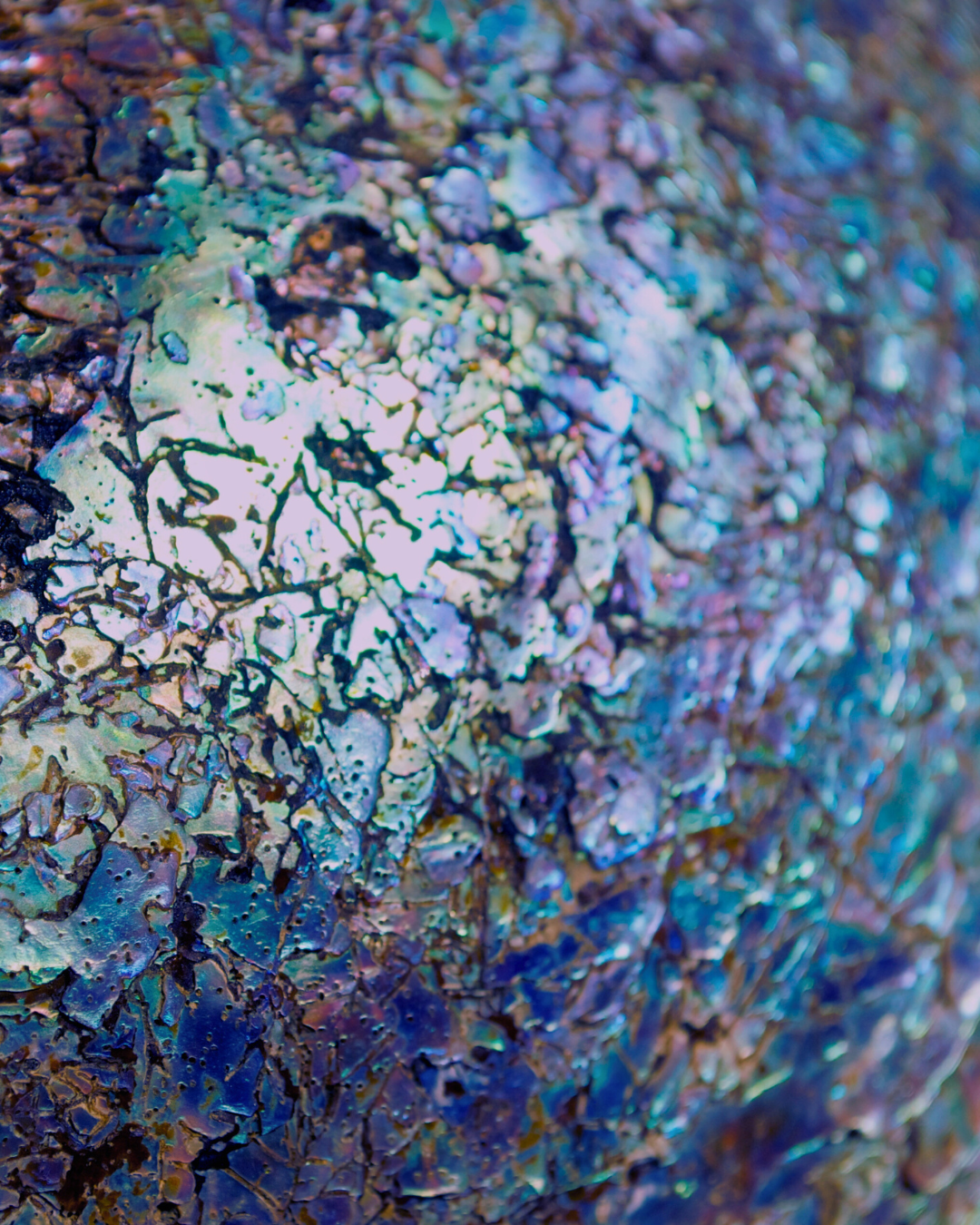
One of the most striking details within Māori carving is the use of pāua shell. These shells, harvested from coastal waters, are traditionally set into carved figures to form the eyes of ancestors and guardians. Their luminous surfaces shift between turquoise, deep blue, violet, and green depending on the light. In carving, pāua is not simply decorative. The shimmering shell gives the figures a sense of life and watchfulness, allowing the ancestors represented in the wood to feel present within the space.
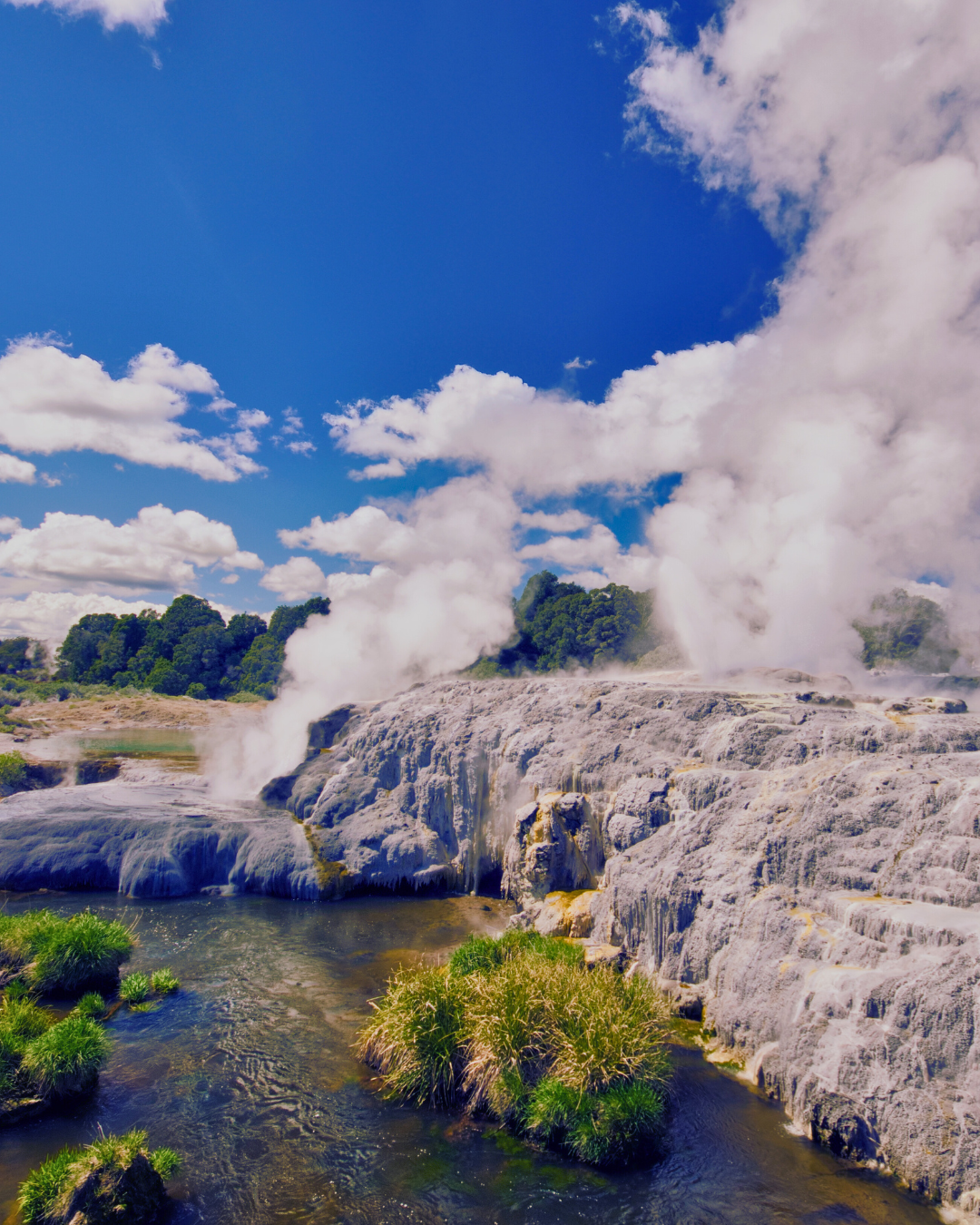
The geothermal landscape surrounding the institute forms a dramatic natural backdrop. The Pōhutu Geyser, the largest active geyser in the Southern Hemisphere, erupts up to twenty times a day, sending steam and boiling water as high as thirty meters into the air. Its name means “big splash” in Māori. The geyser has erupted consistently for centuries, a reminder that the same geothermal forces shaping the valley remain active beneath the surface.
In this place, cultural practice and geology exist side by side. Carved meeting houses stand beside steaming vents. Workshops filled with chisels and wood shavings overlook mineral terraces and boiling springs. The landscape feels both ancient and ongoing.
Translating the Landscape Into Abstract Cartography
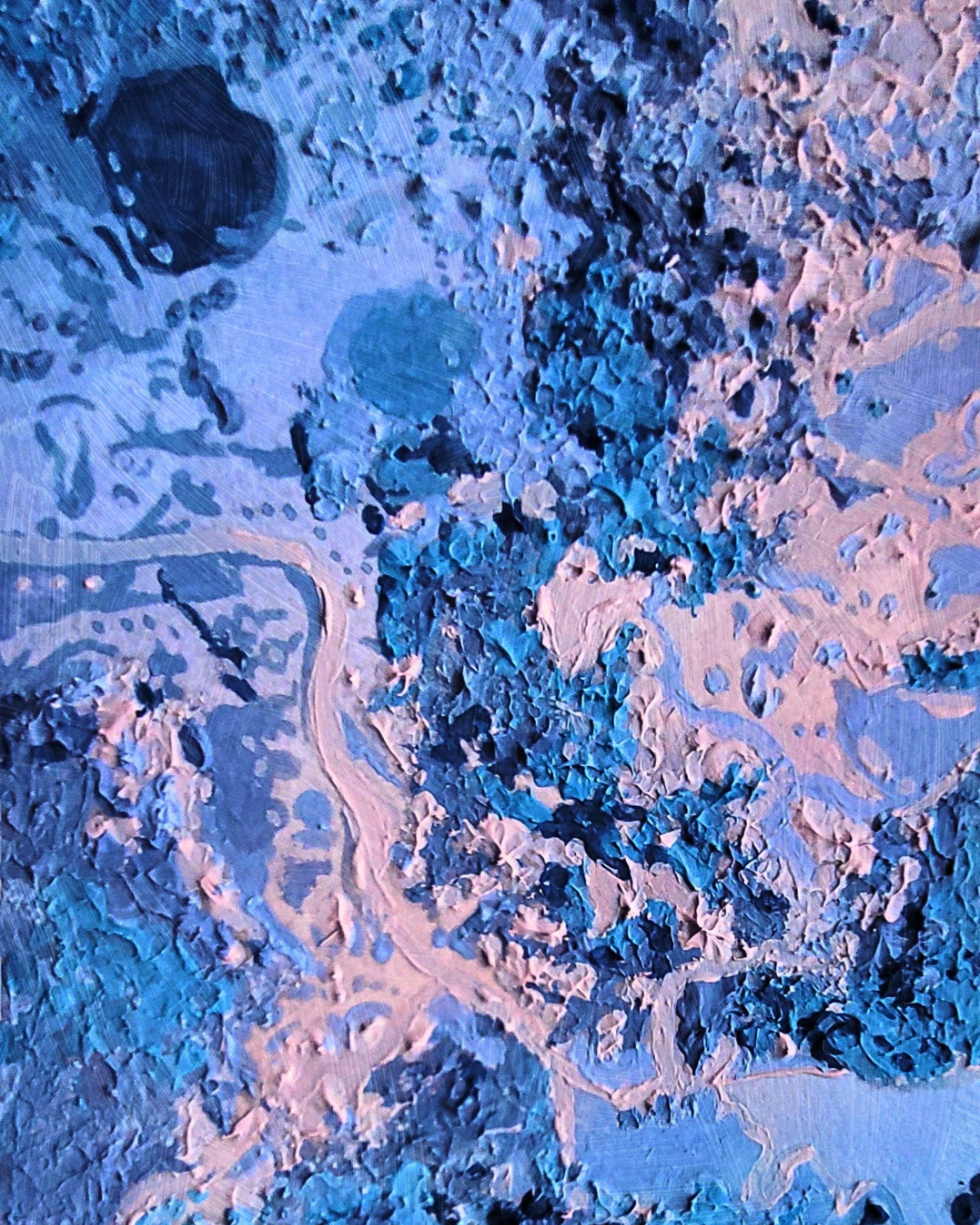
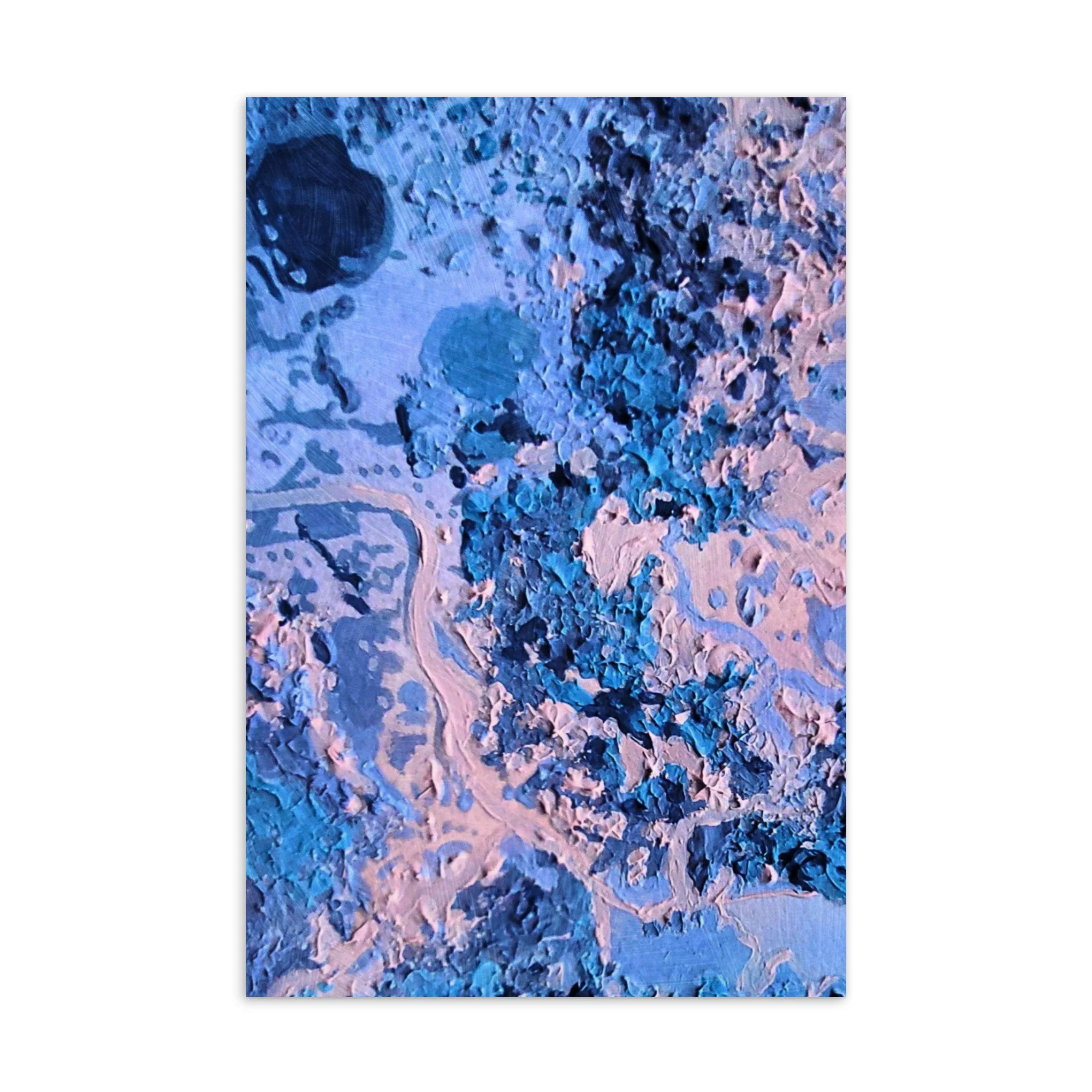
This painting was created as an abstract cartography of that experience. Rather than documenting the site literally, the work maps the sensation of being there.
The painting reflects these experiences through layered blues, mineral pinks, and deep earthen tones. Thick, sculptural textures echo silica terraces and cooling lava. Pools of saturated blue suggest geothermal waters, while raised passages of paint resemble carved surfaces and woven fibres. Flowing, organic lines move across the canvas like steam drifting through the valley or like patterns emerging from whakairo. The composition feels immersive and tactile, mirroring the sensory intensity of Te Puia itself, where heat, history, artistry, and guardianship converge in one living landscape.
These tones were influenced by the iridescent surface of pāua shell used in Māori carving. The shifting blues and pinks of the shell appear unexpectedly within carved figures, catching light in a way that feels almost alive. In the painting, similar colors gather within the composition like pools of geothermal water or moments of reflected light moving across mineral surfaces.
Layered forms suggest both landscape and structure. Some shapes recall the rising steam of the valley, while others hint at the carved beams and symbolic motifs found within meeting houses. The composition slowly unfolds from a grounded center outward, much like the experience of standing between the carved architecture of the arts center and the living geothermal earth beyond it.
Collecting the Te Puia Artwork
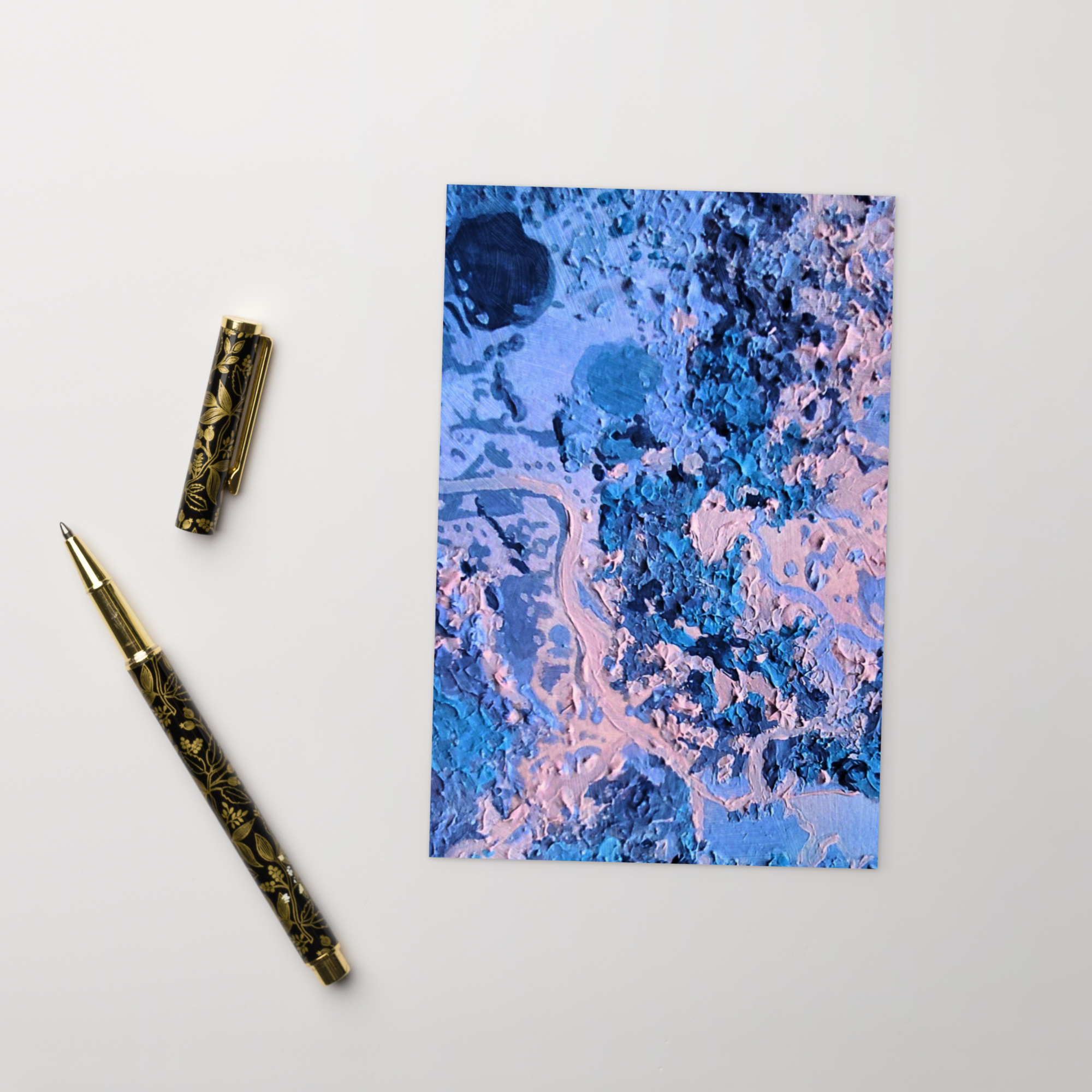
• Cardboard paper
• Paper weight: 7.67–10.32 oz/yd² (260–350 g/m²)
• Size: 4″ × 6″ (101 × 152 mm)
• Paper thickness: 0.013″ (0.34 mm)
• Coated outer surface
• Blank product materials sourced from Sweden, US, Brazil, or China
