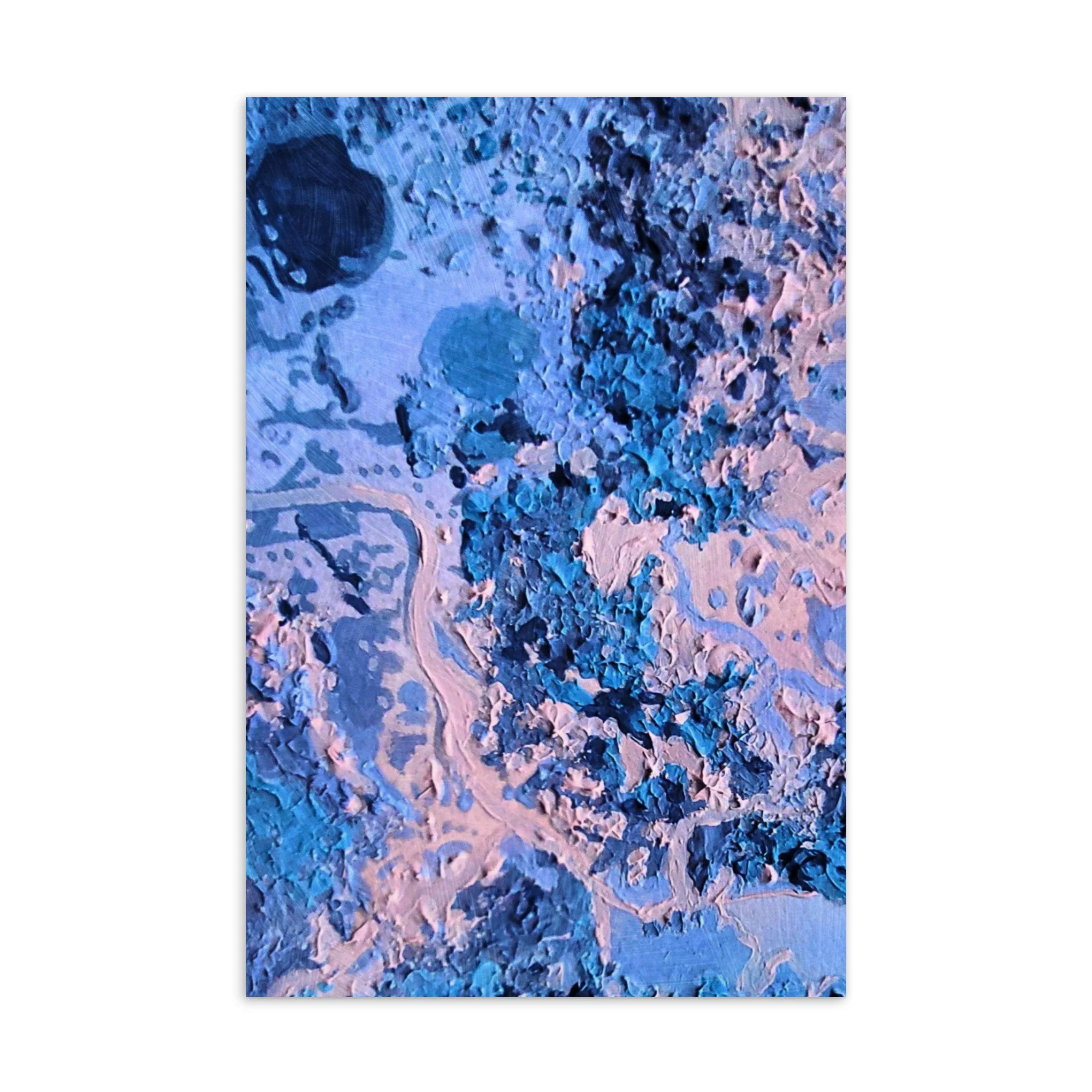
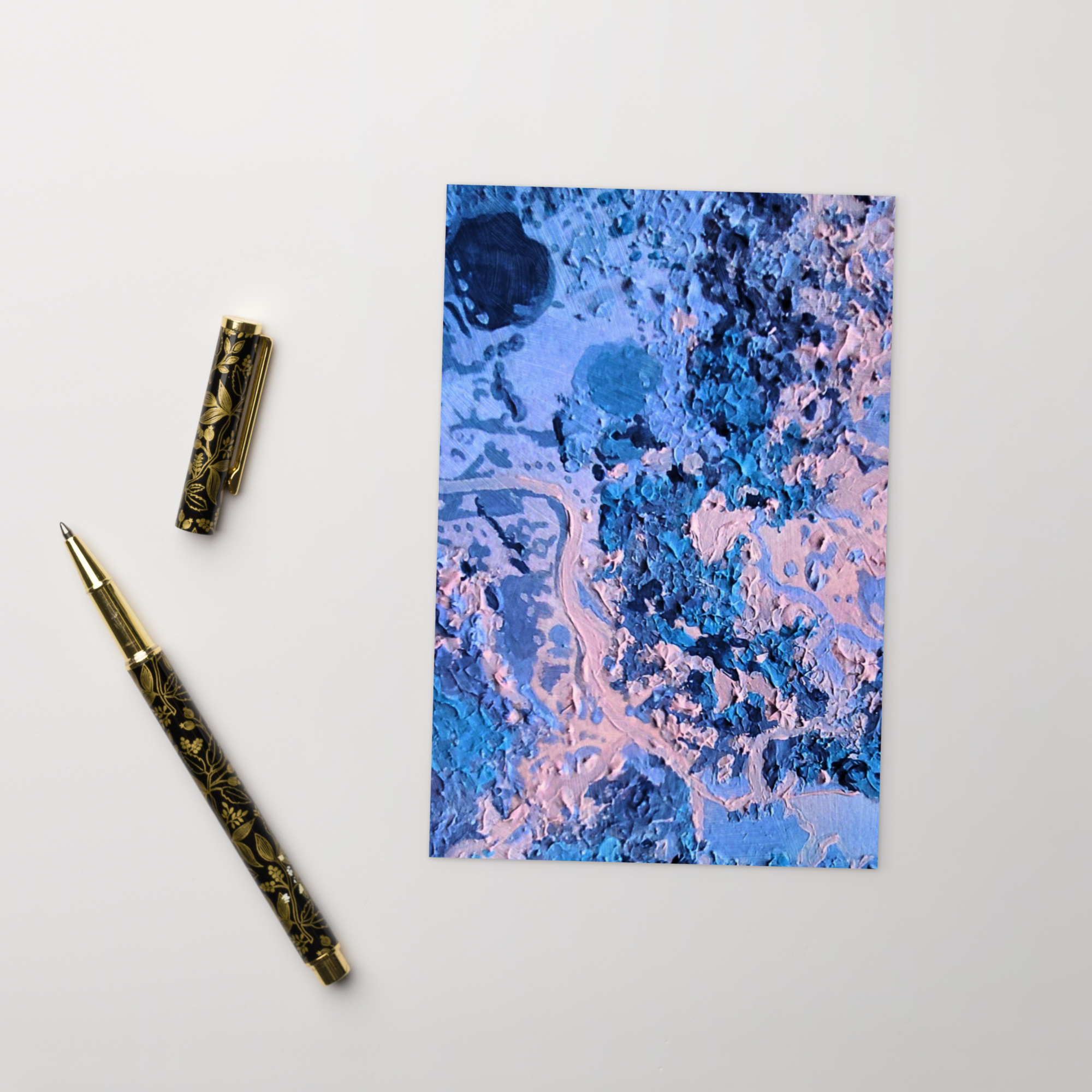
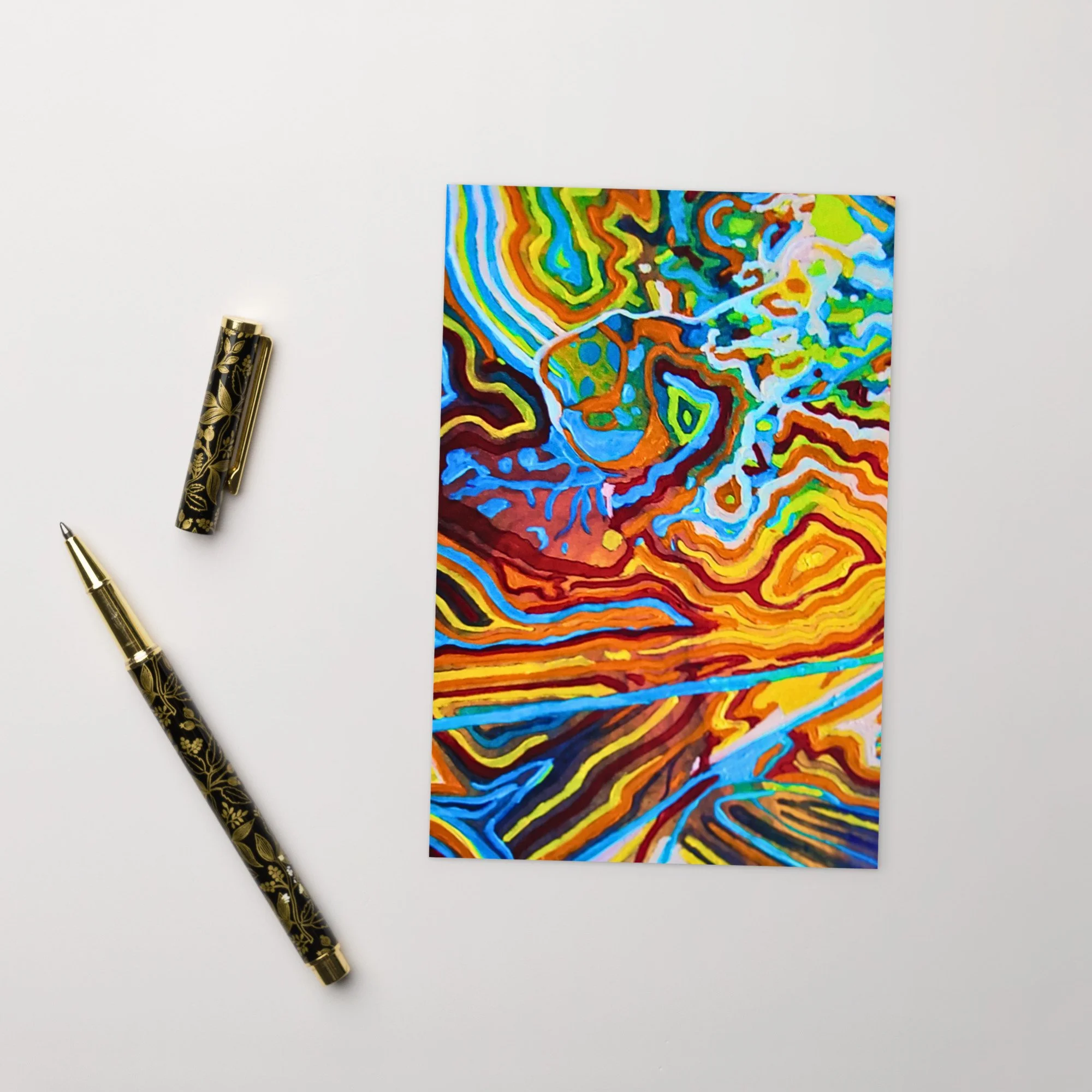
Te Puia in Rotorua feels elemental and deeply rooted, a place where culture and landscape speak together. Steam drifts through the village as geysers breathe rhythmically, the scent of sulphur hangs in the air, and carved meeting houses stand grounded in ancestral knowledge. Walking through Te Puia is a slow experience, guided by warmth rising from the earth, the sound of bubbling mud pools, and the quiet presence of Māori tradition woven into everyday life. This painting translates Te Puia Geothermal Park into an abstract cartography, mapping heat, movement, and memory rather than physical paths. Layered blues and mineral whites echo steaming pools and silica terraces, while textured passages suggest shifting ground and geothermal pressure beneath the surface. Flowing lines act as traces of steam and pathways through the village, creating a composition that holds both cultural continuity and the living energy of the land.
• Cardboard paper
• Paper weight: 7.67–10.32 oz/yd² (260–350 g/m²)
• Size: 4″ × 6″ (101 × 152 mm)
• Paper thickness: 0.013″ (0.34 mm)
• Coated outer surface
• Blank product materials sourced from Sweden, US, Brazil, or China
Get notified by email when this product is in stock.
Te Puia in Rotorua feels elemental and deeply rooted, a place where culture and landscape speak together. Steam drifts through the village as geysers breathe rhythmically, the scent of sulphur hangs in the air, and carved meeting houses stand grounded in ancestral knowledge. Walking through Te Puia is a slow experience, guided by warmth rising from the earth, the sound of bubbling mud pools, and the quiet presence of Māori tradition woven into everyday life. This painting translates Te Puia Geothermal Park into an abstract cartography, mapping heat, movement, and memory rather than physical paths. Layered blues and mineral whites echo steaming pools and silica terraces, while textured passages suggest shifting ground and geothermal pressure beneath the surface. Flowing lines act as traces of steam and pathways through the village, creating a composition that holds both cultural continuity and the living energy of the land.
• Cardboard paper
• Paper weight: 7.67–10.32 oz/yd² (260–350 g/m²)
• Size: 4″ × 6″ (101 × 152 mm)
• Paper thickness: 0.013″ (0.34 mm)
• Coated outer surface
• Blank product materials sourced from Sweden, US, Brazil, or China