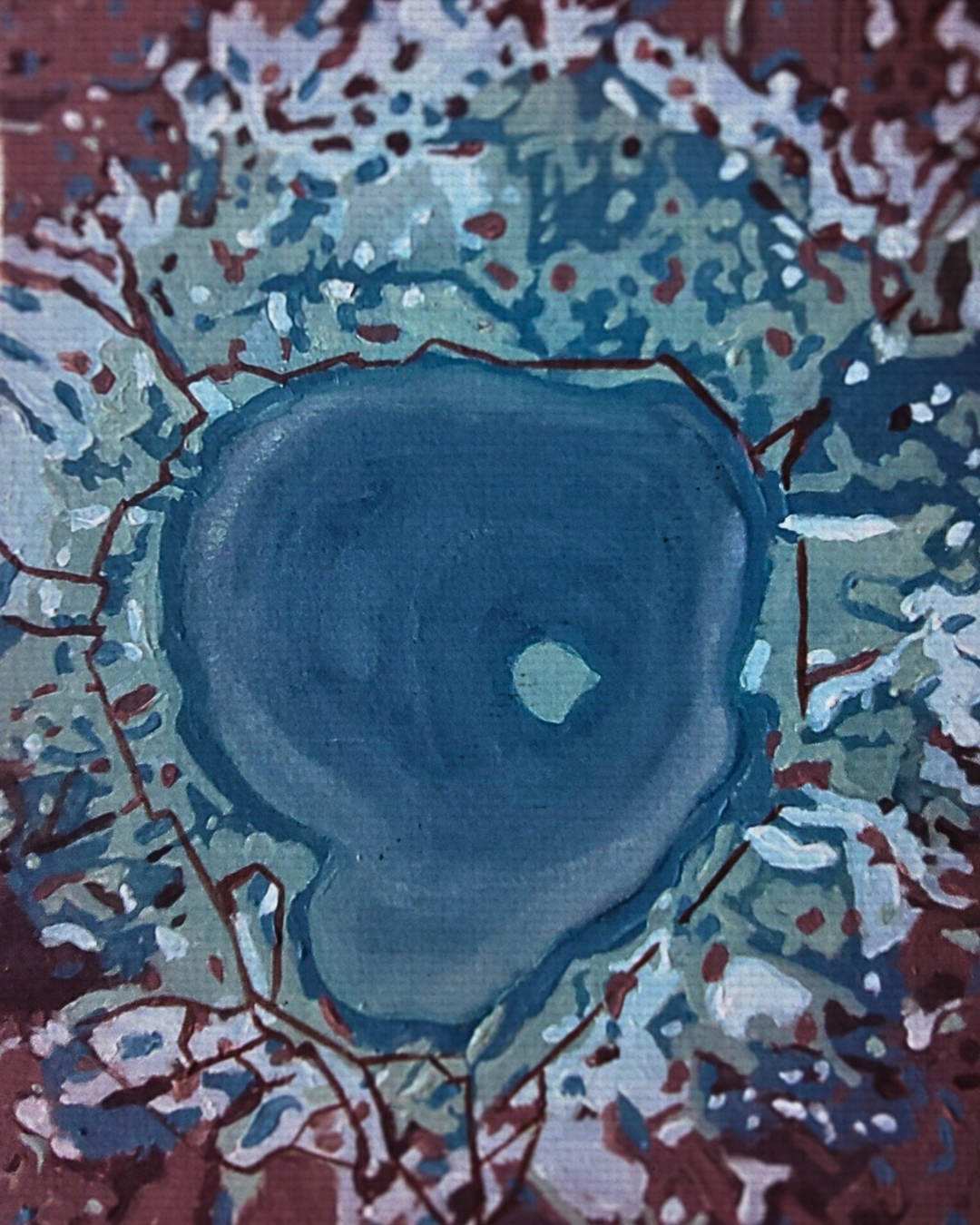
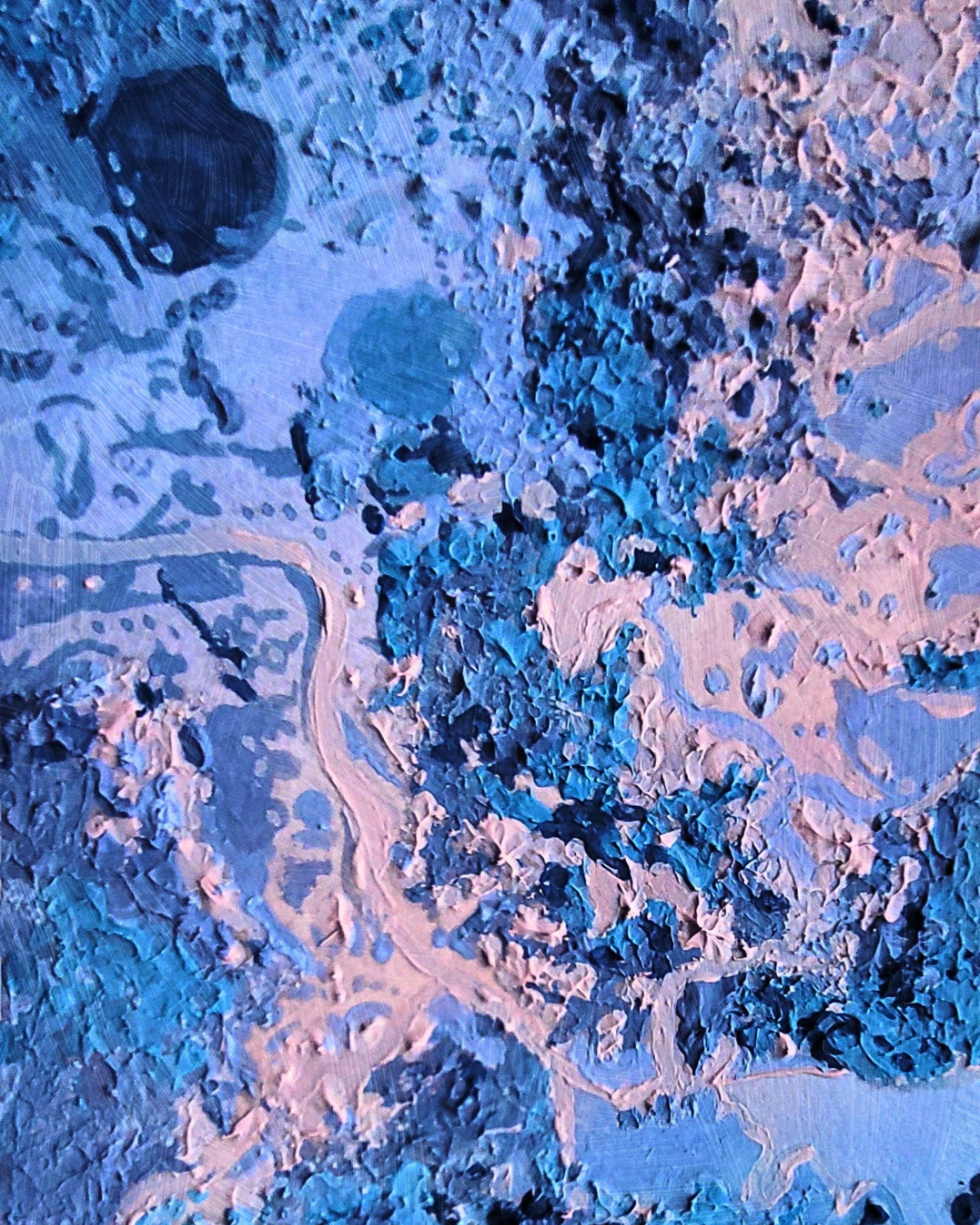
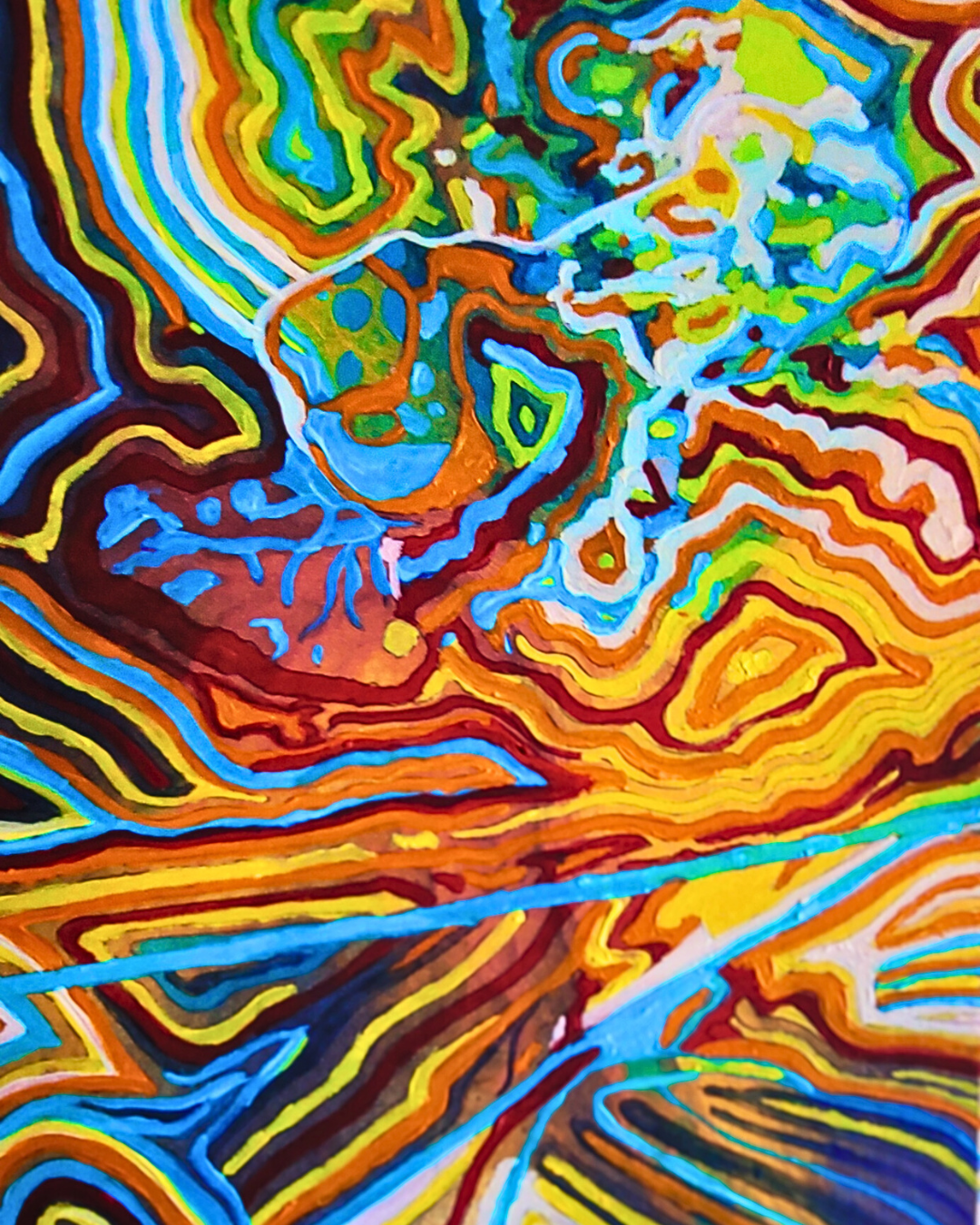
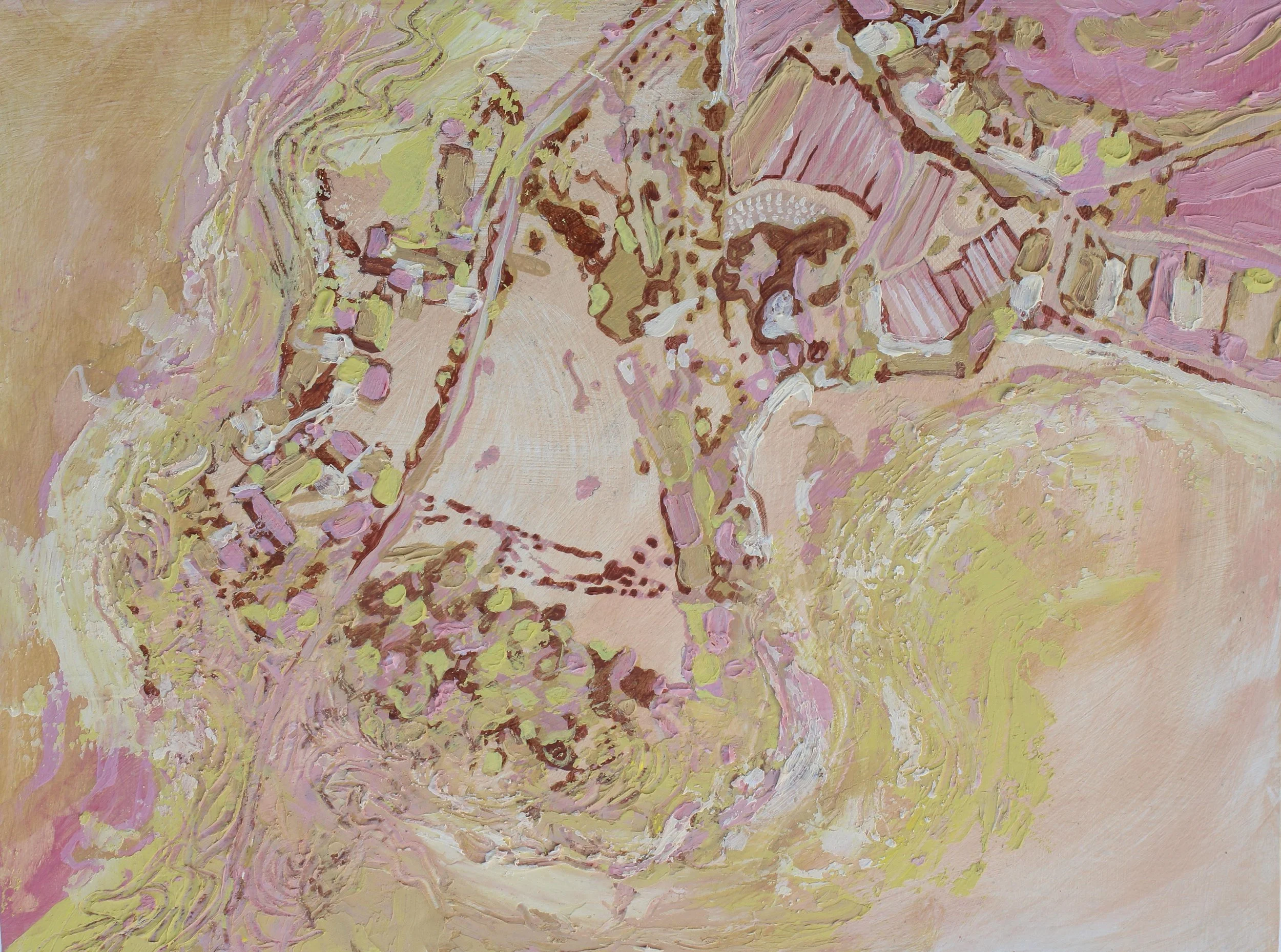
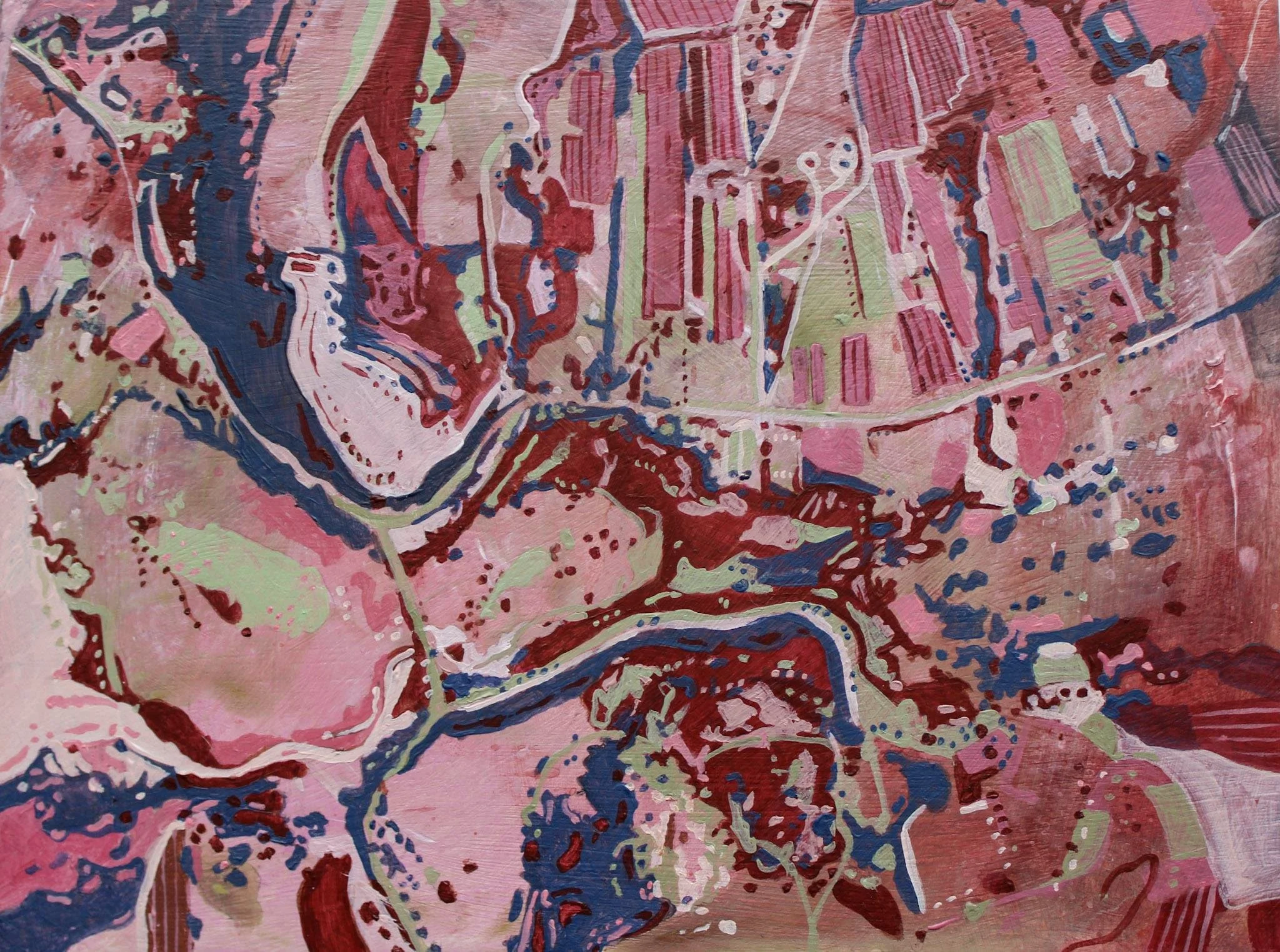
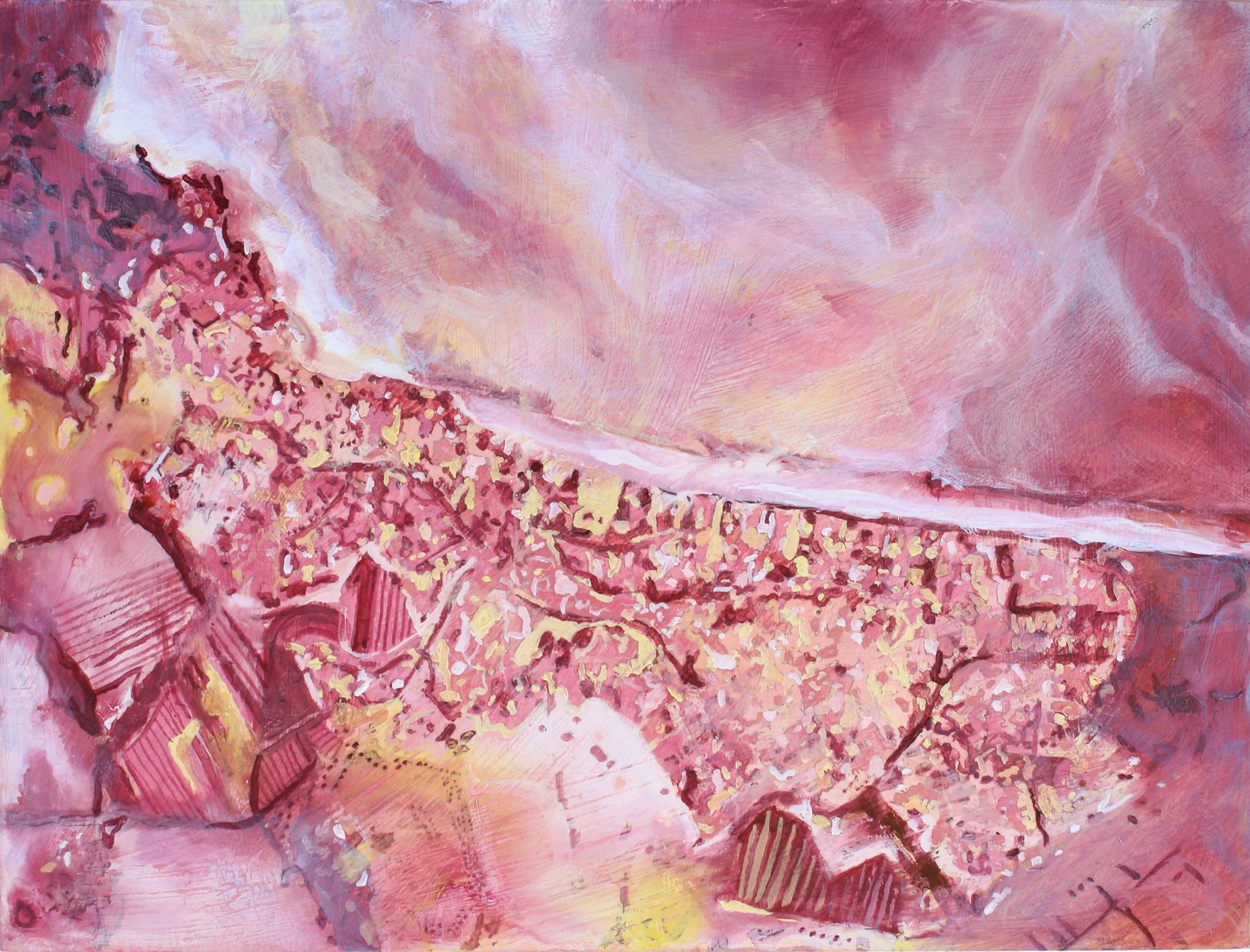
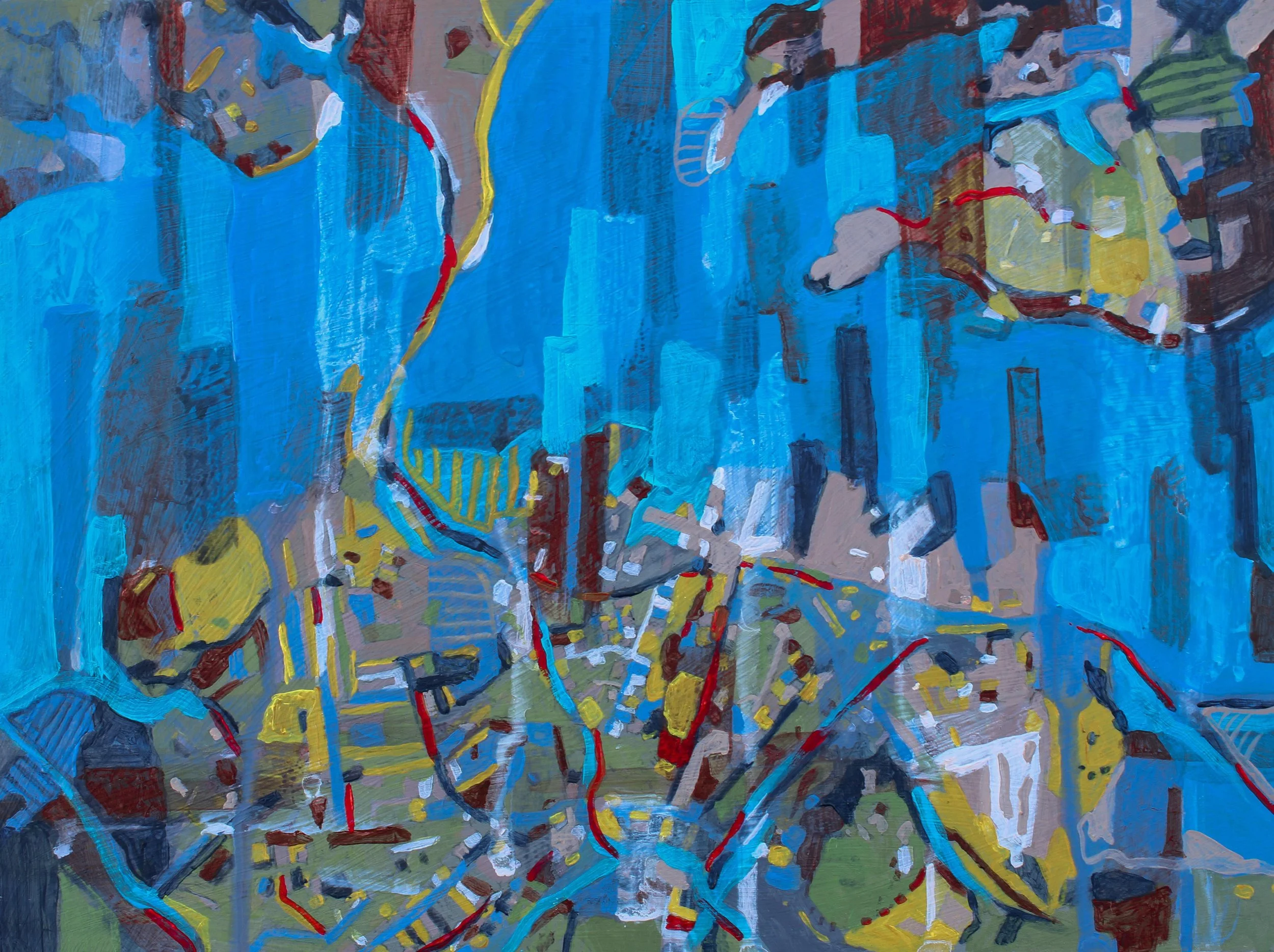
This series presents a body of abstract map paintings developed from travel through New Zealand, a place where land, identity, and history are inseparable. Rather than depicting specific locations, the works translate lived experience into abstracted cartographies, examining how place shapes identity over time.
In Auckland, perception was shaped by compression. Glass towers, harbor light, and fast-moving weather created a city felt both vertically and laterally at once. Reflections replaced solidity. Public intensity contrasted with private moments of stillness in salons, cinemas, and galleries. The urban experience oscillated between surge and pause, density and interior quiet.
On Waiheke Island, pace shifted. Vineyards, mineral air, mosaic pathways, and slow conversations at places such as Casita Miro, Tantalus Estate, and Goldie Estate shaped a different register of attention. Sensory experience accumulated gradually — acidity and structure in rosé and syrah, salt carried inland from the sea, wood warmed by afternoon sun.
In Rotorua, the landscape introduced a deeper elemental presence.
Within the Redwood Forest (Whakarewarewa Forest), verticality shifted from glass to bark. Redwoods rose in measured columns, their height dissolving into filtered light. The forest floor held damp earth, fallen needles, and a muted palette of rust and shadowed green. Walking there felt like moving through a cathedral built by time, scale humbling but not overwhelming. In the studio, this translated into elongated forms, grounded tones, and layered translucency that allows light to pass rather than sit on the surface.
At Te Puia, the presence of the New Zealand Māori Arts and Crafts Institute introduced a structure rooted in lineage, pattern, and embodied knowledge. Carved meeting houses carried histories and traditions. Repetition and symmetry were not decorative but relational, each line part of a larger generational narrative. The geothermal breath of nearby geysers and steam vents blurred edges between earth and air. From this experience, pattern entered the work not as ornament, but as rhythm, a reminder that mark-making can hold ancestry, continuity, and collective memory.
At Wai-O-Tapu Thermal Wonderland, the ground itself felt unstable and alive. Mineral pools held opaque color — sulfuric yellows, oxidized oranges, dense turquoise — tones that seemed impossible yet entirely natural. Steam shifted constantly, obscuring and revealing form. The scent of sulfur made the body aware of its own breath. Here, landscape appeared abstract without intervention. In response, color became more assertive. Edges softened under veils of translucent layering.
Across these locations — urban harbor, island vineyard, forest cathedral, geothermal field — sensation accumulated through sight, sound, humidity, mineral scent, temperature shifts, communal energy, and solitary walking all translated into material decisions.
These works do not document geography. They register how place moves through the body and settles into perception.
Surface becomes a site of negotiation between compression and expansion, pattern and erosion, stillness and subterranean force. Color carries atmosphere. Together, the series considers environment not as backdrop, but as an active force in the shaping of memory and identity. Each painting remains a map of lived encounter, inviting the viewer to recognize how external landscapes continue within internal ones.