Wai-O-Tapu: Sacred Waters
At Wai-O-Tapu Thermal Wonderland, the ground does not sit still.
Steam rises in slow breaths from the earth.
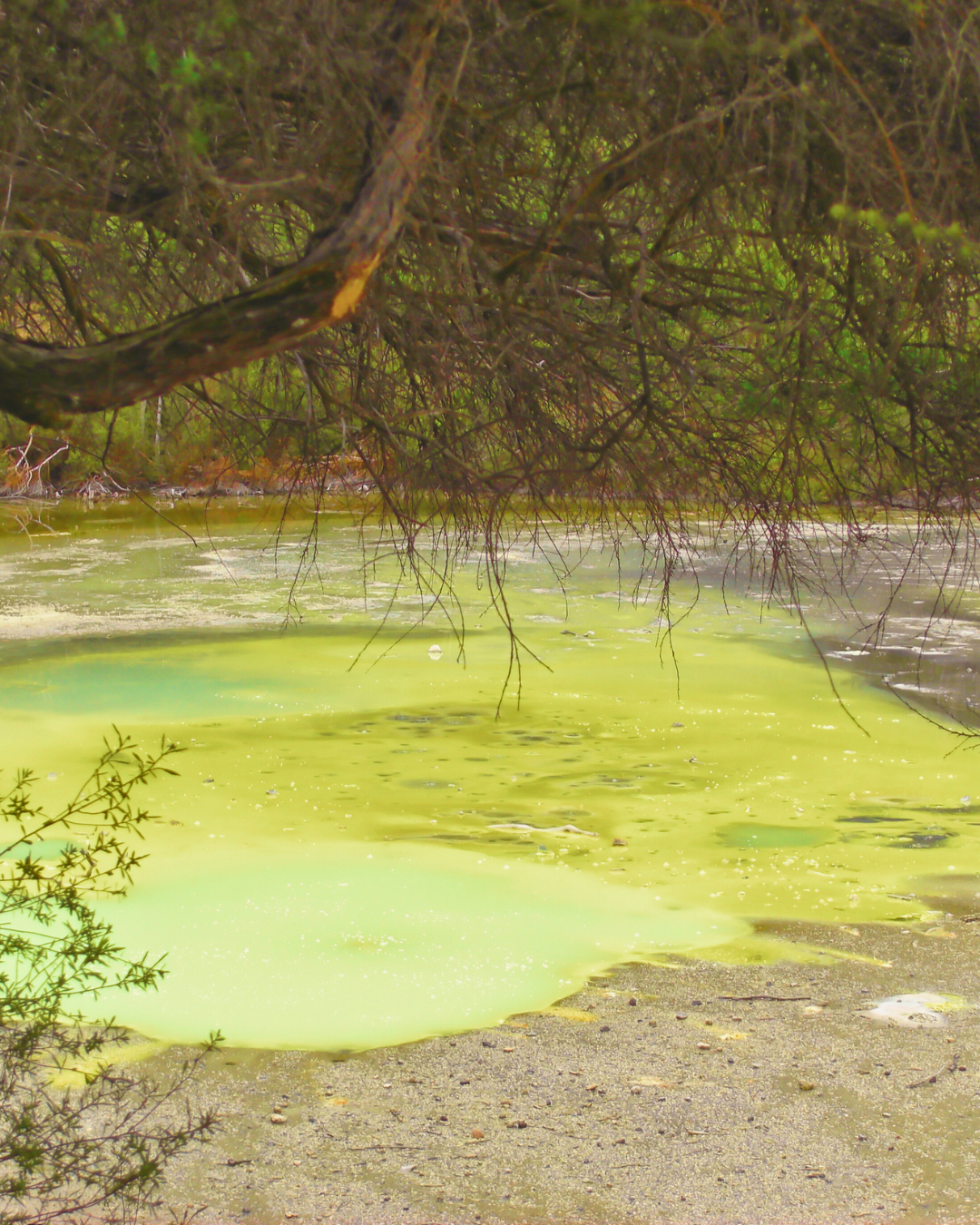
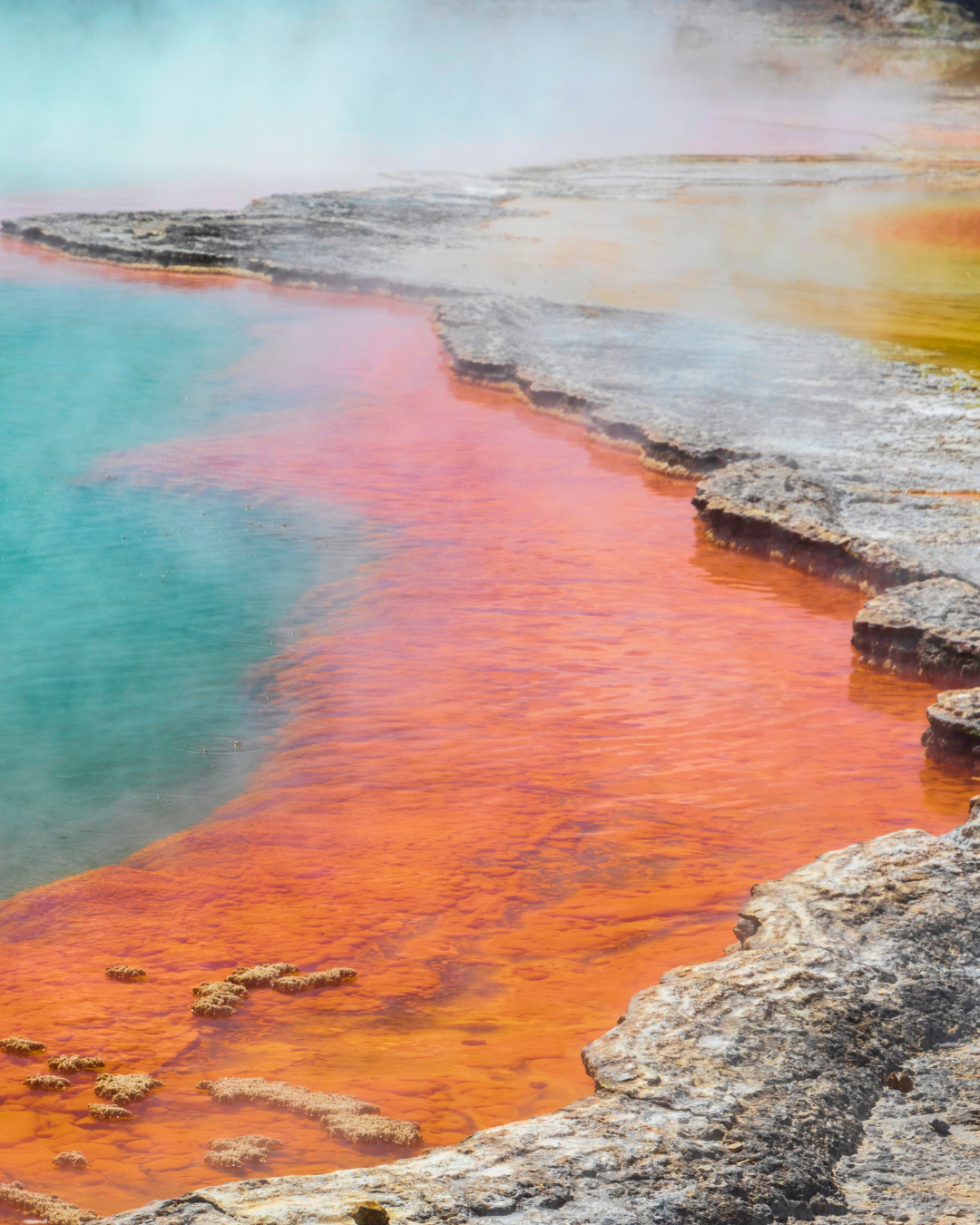
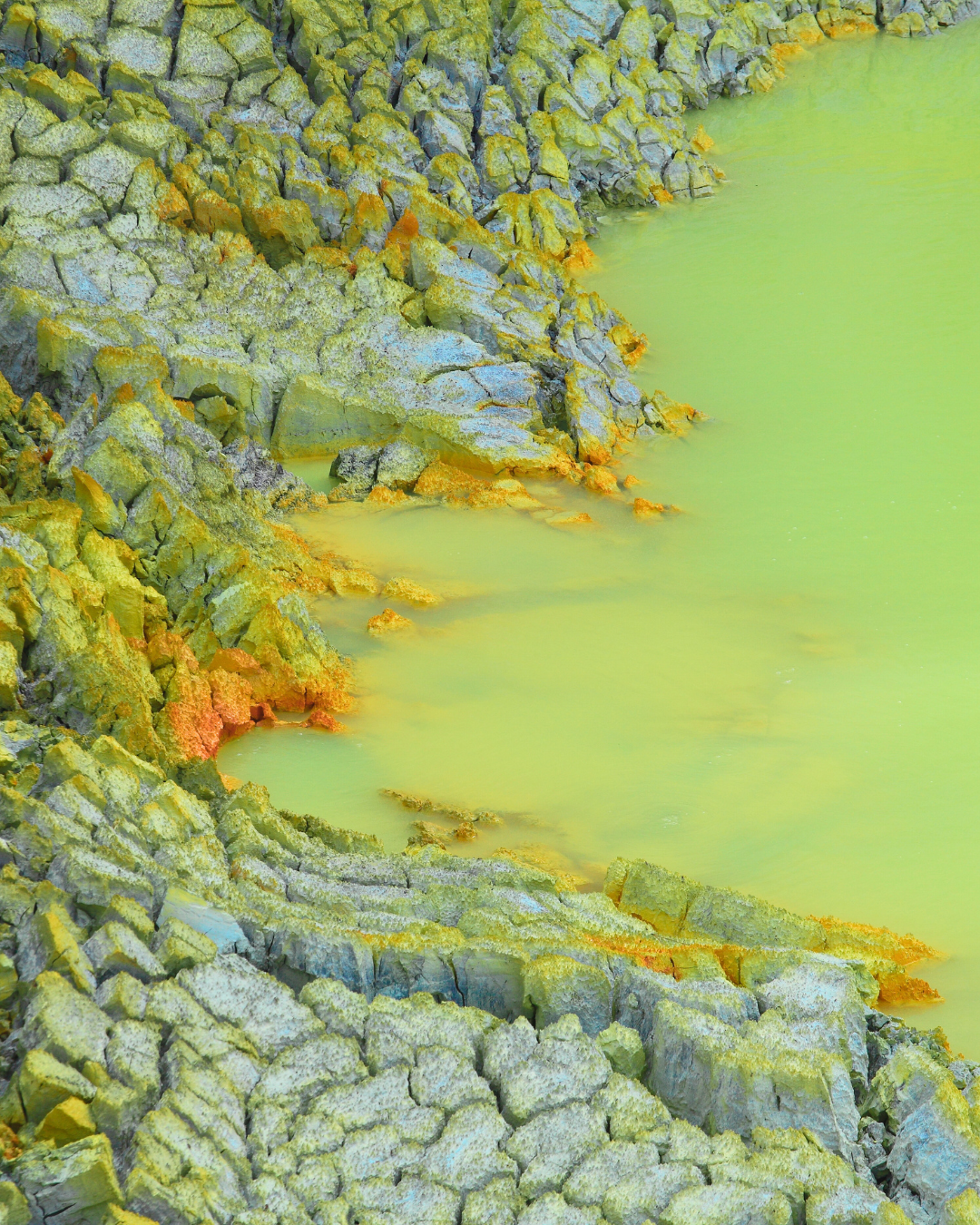
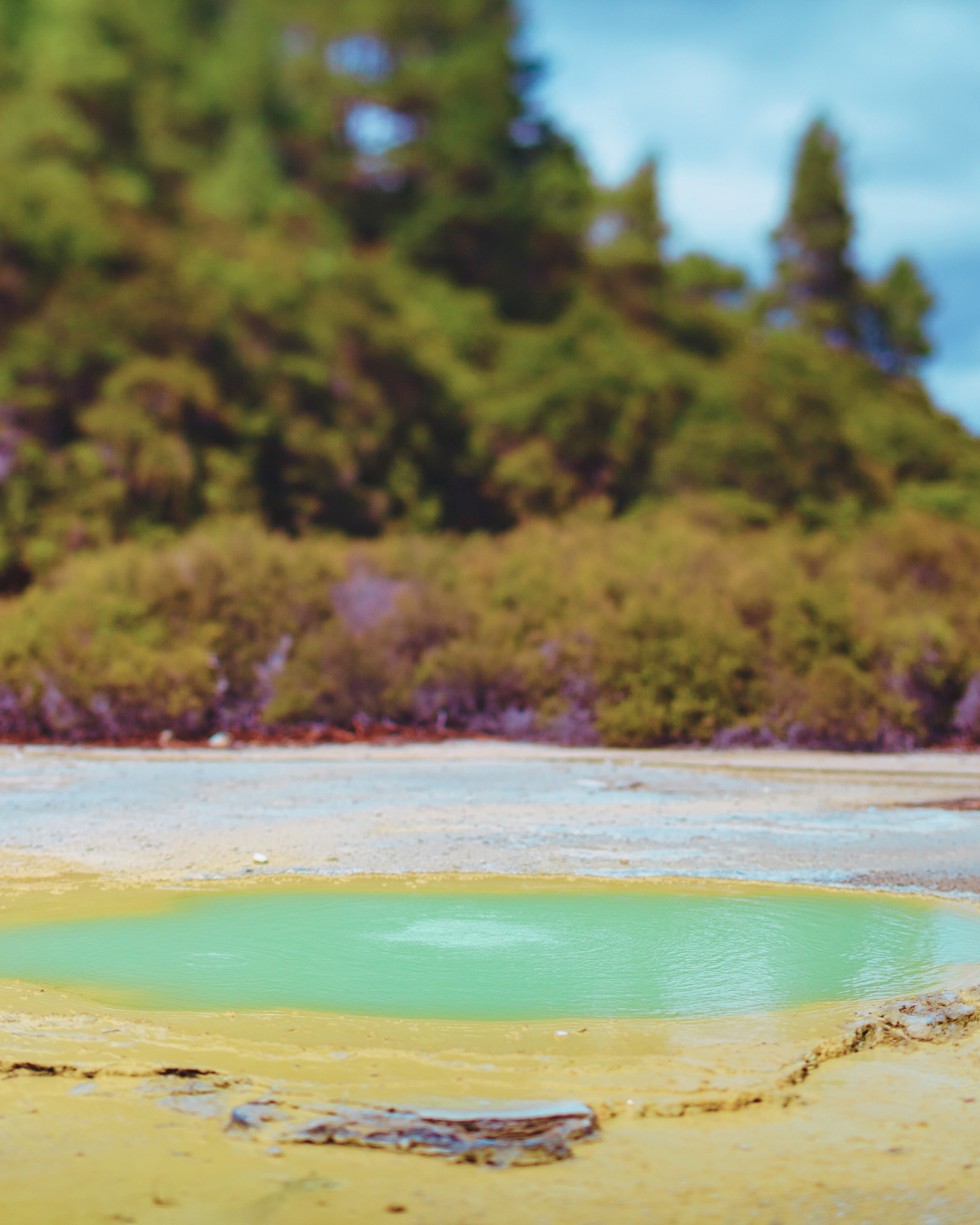
Mineral pools hold colors that feel almost imagined, soft greens, rusted orange, cloudy blue. The air carries the scent of sulfur, sharp but honest. It reminds you that this landscape is active, alive beneath your feet.
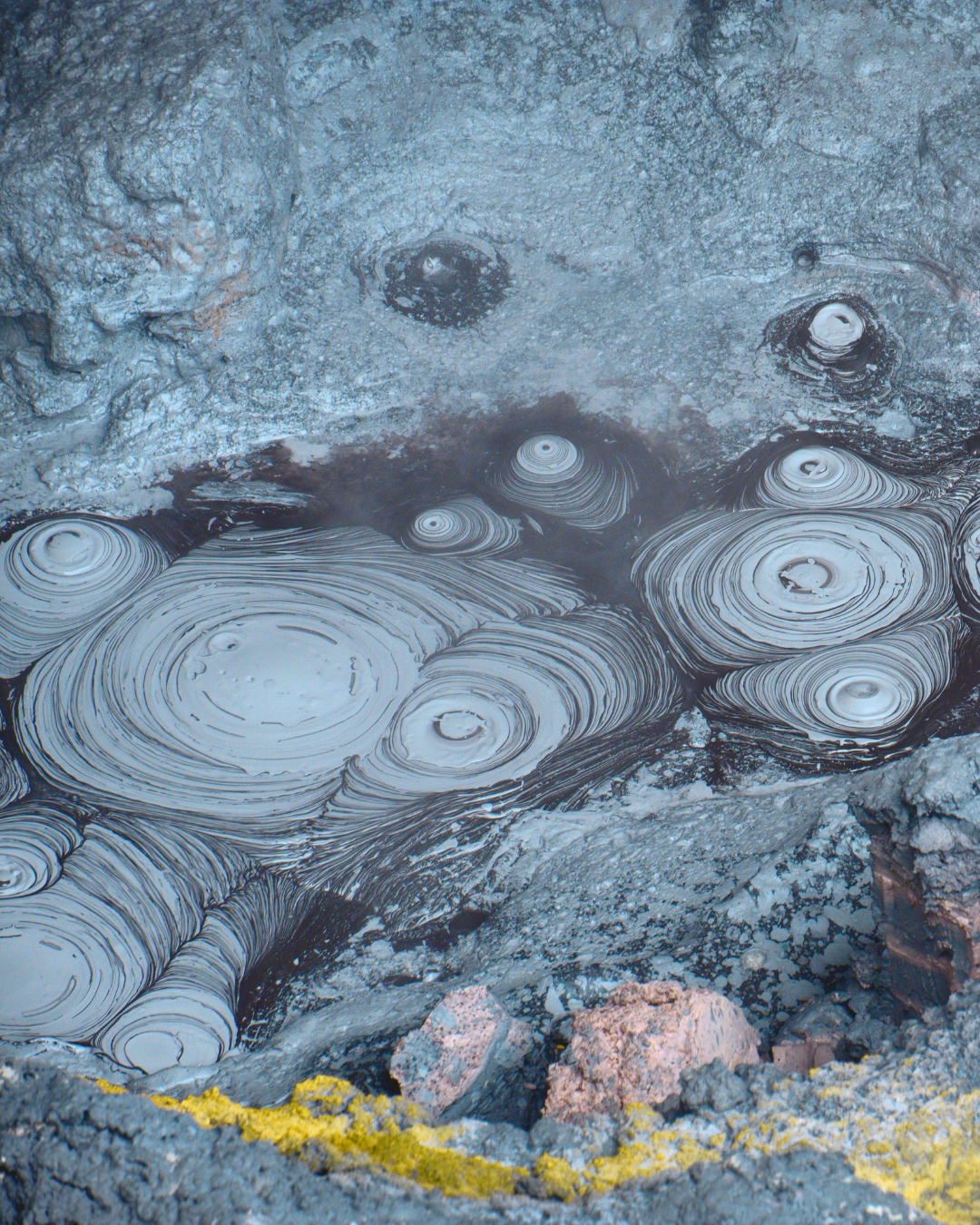
Along the thermal track, the path winds past craters and shifting water. The Champagne Pool rests wide and luminous, its edge traced in bright mineral deposits. Nearby, mud pools fold and release in small bursts, as if the land is thinking out loud.
It is not a place of still surfaces.
Everything here moves, even when it looks calm.
Walking through Wai-o-tapu, you begin to notice how the lines of steam and mineral deposits echo patterns you might later recognize in abstraction. Shapes formed slowly. Colors pulled from deep below. A map written by heat and time rather than roads.
You leave with the sense that the earth has been quietly at work long before you arrived, and will continue long after you’ve gone.
Wai-O-Tapu does not feel like a quiet landscape. The ground breathes. Steam rises from fissures in the earth, mineral pools glow in colors that feel almost impossible, and the air carries the sharp scent of sulphur and warm stone. Walking through this place is less like sightseeing and more like witnessing the earth in motion.
Sacred Waters and the Stories of the Land
The name Wai-O-Tapu comes from te reo Māori. Wai means water and tapu means sacred or forbidden. The name translates simply to sacred waters. Long before the area became a destination for travelers, the geothermal landscape held cultural and spiritual significance for Māori communities, particularly iwi of the Ngāti Tahu-Ngāti Whaoa people who maintain ancestral ties to the region.
Geothermal areas across Rotorua were traditionally used for both daily life and ceremony. Hot pools provided places for bathing and healing. Natural vents allowed food to be cooked directly in the earth. The land was understood not as a spectacle but as a living system shaped by deep forces beneath the surface.
In Māori cosmology, powerful guardian beings called taniwha are believed to inhabit certain waters and landscapes. These stories describe places where the boundary between the visible and unseen world feels thin. In geothermal landscapes like Wai-O-Tapu, rising steam and shifting ground could be read as signs of those unseen presences moving below.
The region also sits within the Taupō Volcanic Zone, one of the most active geothermal systems on the planet. Beneath the vibrant pools lies a vast network of heated groundwater circulating through volcanic rock. As water rises through the earth it carries dissolved minerals that settle into layers of color. Iron creates rusted reds and oranges. Sulphur deposits produce bright yellows. Silica leaves pale mineral terraces that ripple outward from geothermal springs.
The landscape gained wider attention after the eruption of Mount Tarawera in 1886, one of the most powerful volcanic events in New Zealand’s recorded history. That eruption destroyed the famous Pink and White Terraces nearby, which had been considered one of the natural wonders of the world. In the years that followed, scientists and travelers began documenting other geothermal sites across the region, bringing places like Wai-O-Tapu into international awareness.
One of the most curious historical moments tied to the site involves the Lady Knox Geyser. In the early twentieth century, prison workers washing clothes nearby added soap to a hot spring and unexpectedly triggered a dramatic eruption of water. The geyser continues to erupt today when soap is added to the vent, sending water up to twenty meters into the air. It was later named after Constance Knox, daughter of the Governor of New Zealand.
Standing in Wai-O-Tapu today, these layers of story exist together. The land is sacred ground, geological laboratory, and living sculpture formed by heat and mineral time.
Translating the Landscape Into Abstract Cartography
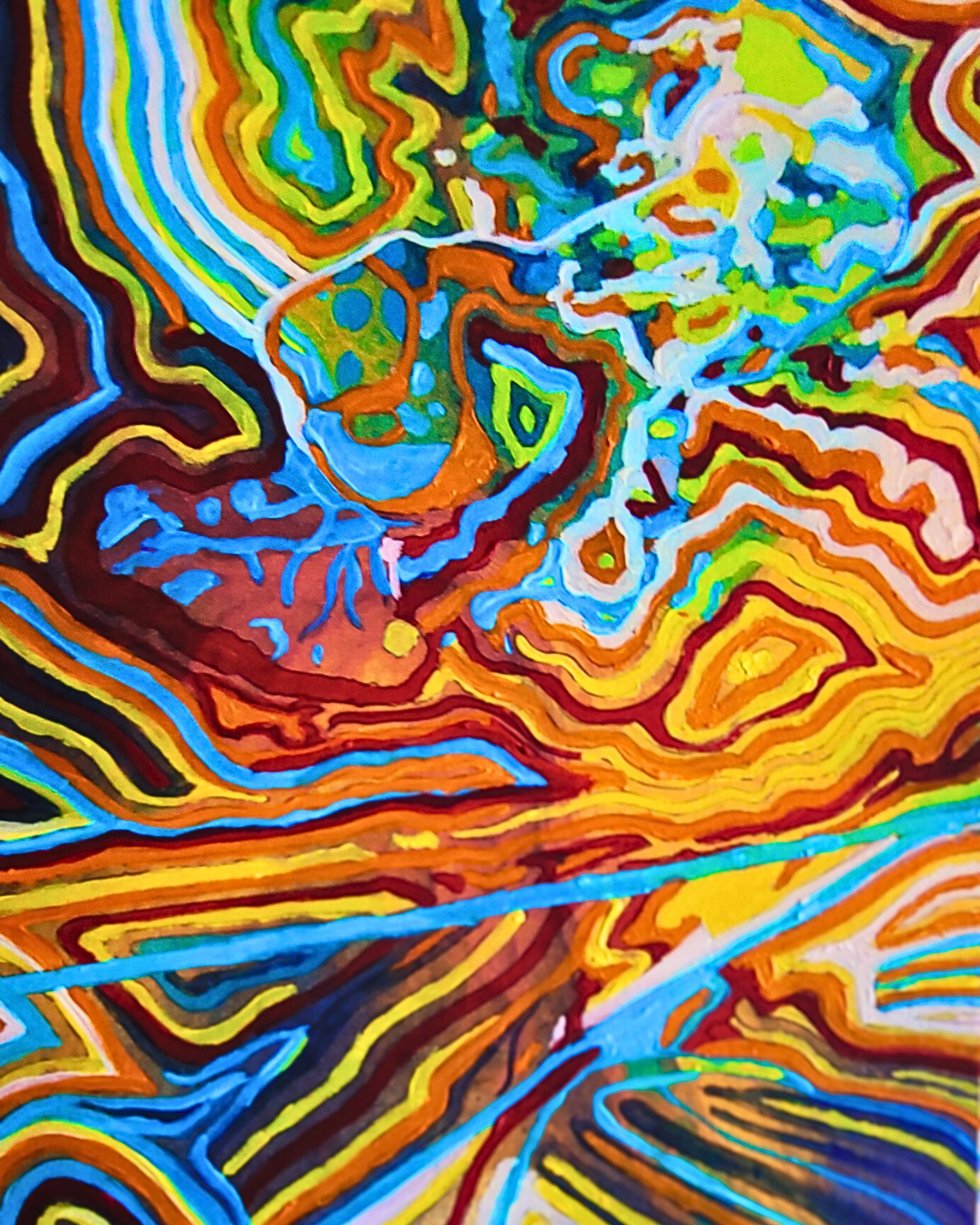
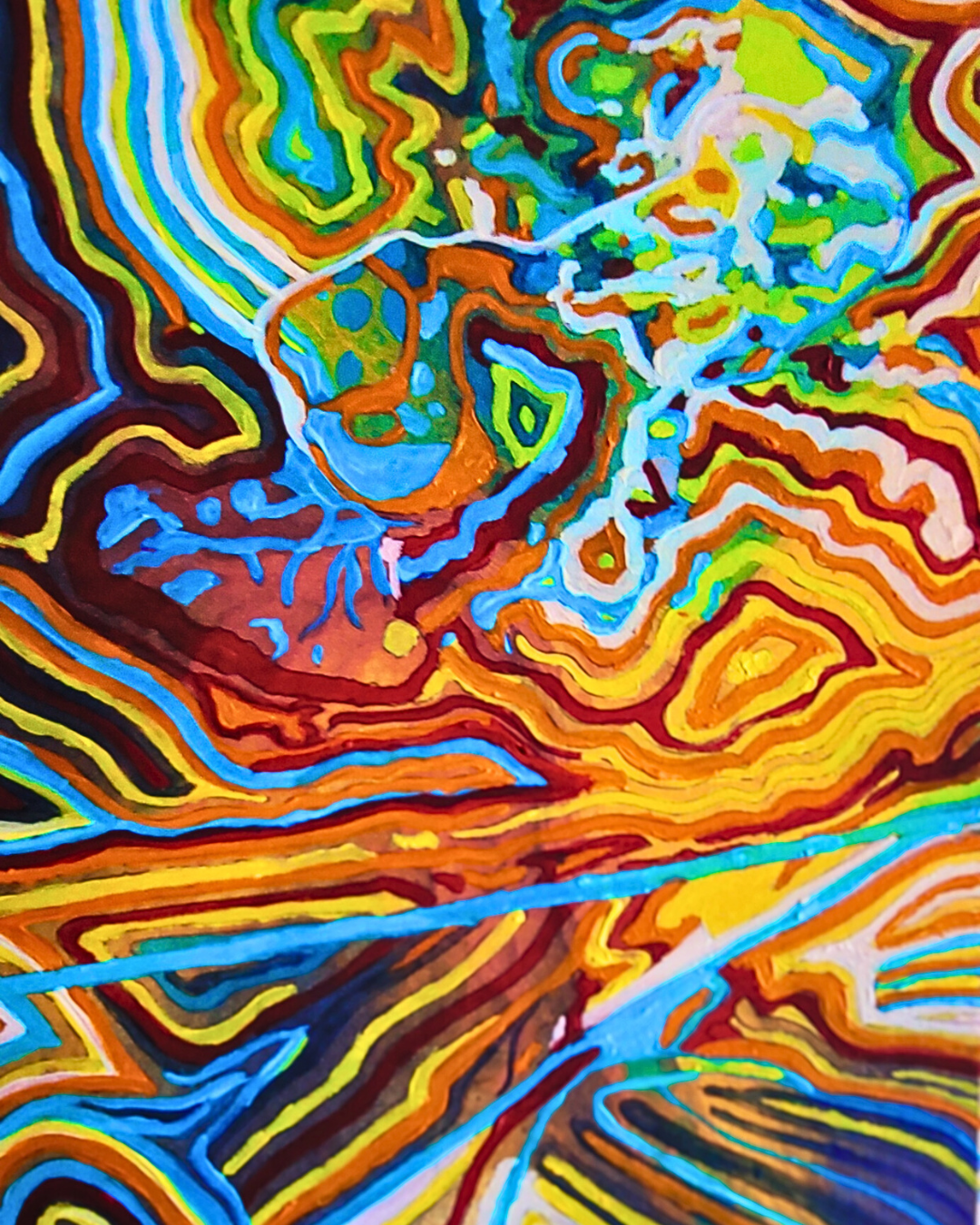
This painting was created as an abstract cartography of that experience. Rather than documenting the site literally, the work maps the sensation of being there.
Bands of electric yellow, molten orange, deep oxides, and mineral blues move across the surface like aerial views of thermal basins. Layered contours echo the mineral terraces formed by centuries of geothermal flow. The composition spreads outward from a luminous center, suggesting the quiet gravity of the Champagne Pool and surrounding geothermal formations.
Lines and marks drift across the surface like traces of steam or sediment. They function as pathways through the composition, guiding the eye slowly through areas of heat, color, and quiet stillness. The painting becomes less a representation of geography and more a memory of movement across the land.
In abstract cartography, the goal is not accuracy but resonance. A place is translated through atmosphere, rhythm, and emotional imprint.
Collecting the Wai-O-Tapu Artwork
This piece is available as a fine art postcard featuring the Wai-O-Tapu painting from the Abstract Cartography series by CLR Creations. The series explores meaningful places through layered color, movement, and memory, translating landscapes into visual maps of experience.
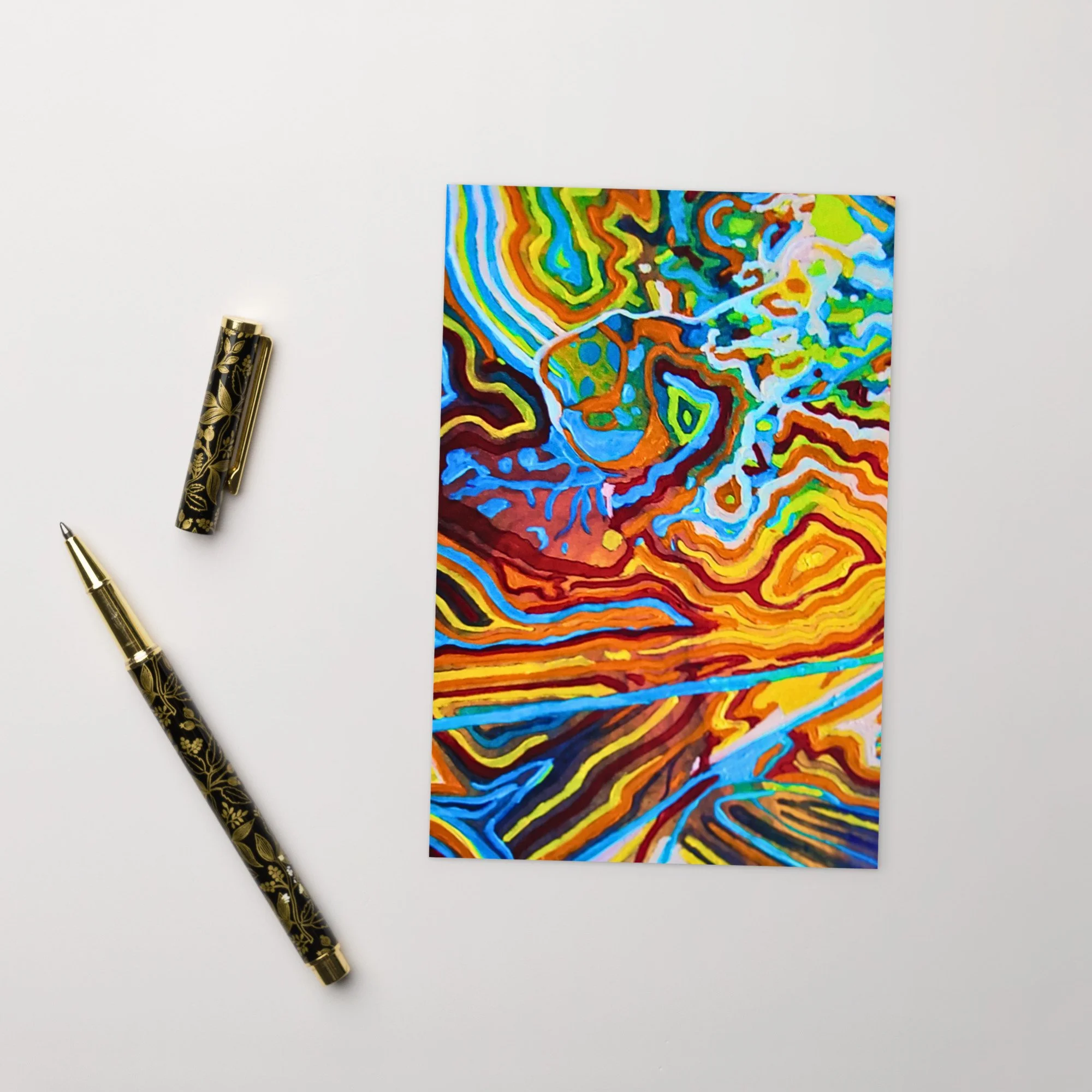
Electric yellows, molten oranges, deep oxides, and luminous blues flow across the composition like an aerial map of thermal terraces. Layered contour bands echo mineral deposits formed slowly over time, while bright turquoise pathways suggest runoff channels cutting through warm earth. The painting becomes an energetic cartography of water, heat, and motion.
Printed as a fine art postcard on thick matte paper, this piece offers a small, tactile way to hold the landscape. It can be framed, gifted, or sent as a thoughtful note.
Details
• Size: 4 × 6 inches (101 × 152 mm)
• Paper weight: 260–350 g/m²
• Paper thickness: 0.34 mm
• Coated outer surface
• Cardboard paper
• Blank product materials sourced from Sweden, US, Brazil, or China